

Ready-Unmade HIL
8093 Zürich,
Suisse
Publié le 14 juillet 2026
ETH Zürich Departement Architektur
Participation au Swiss Arc Award 2026
Données du projet
Données de base
Situation de l'objet
Stefano-Franscini-Platz 5,
8093 Zürich,
Suisse
Projekttyp
Conception de studio / groupe de recherche
Catégorie de projet
Type de bâtiment
Achèvement
05.2026
Description
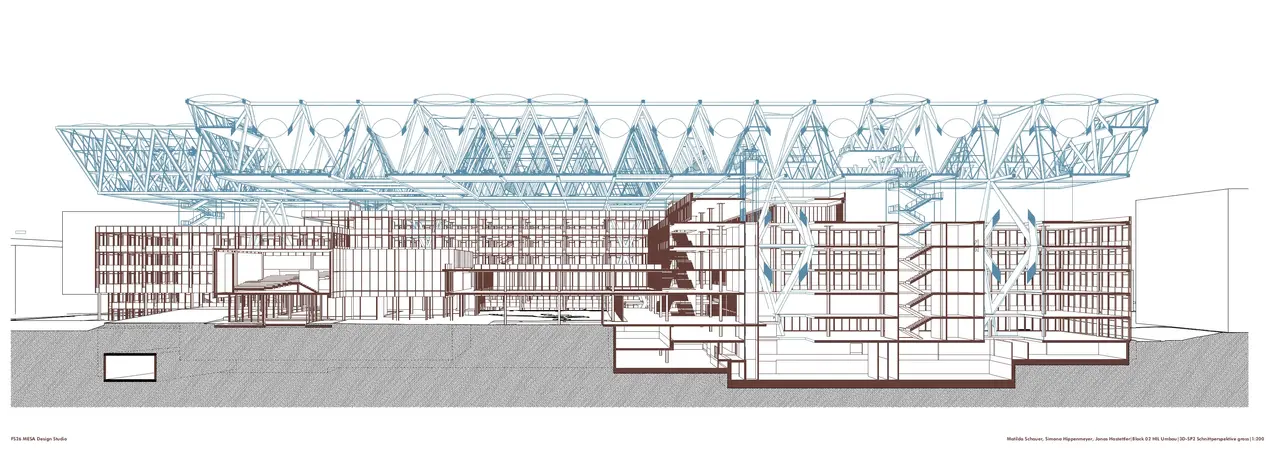
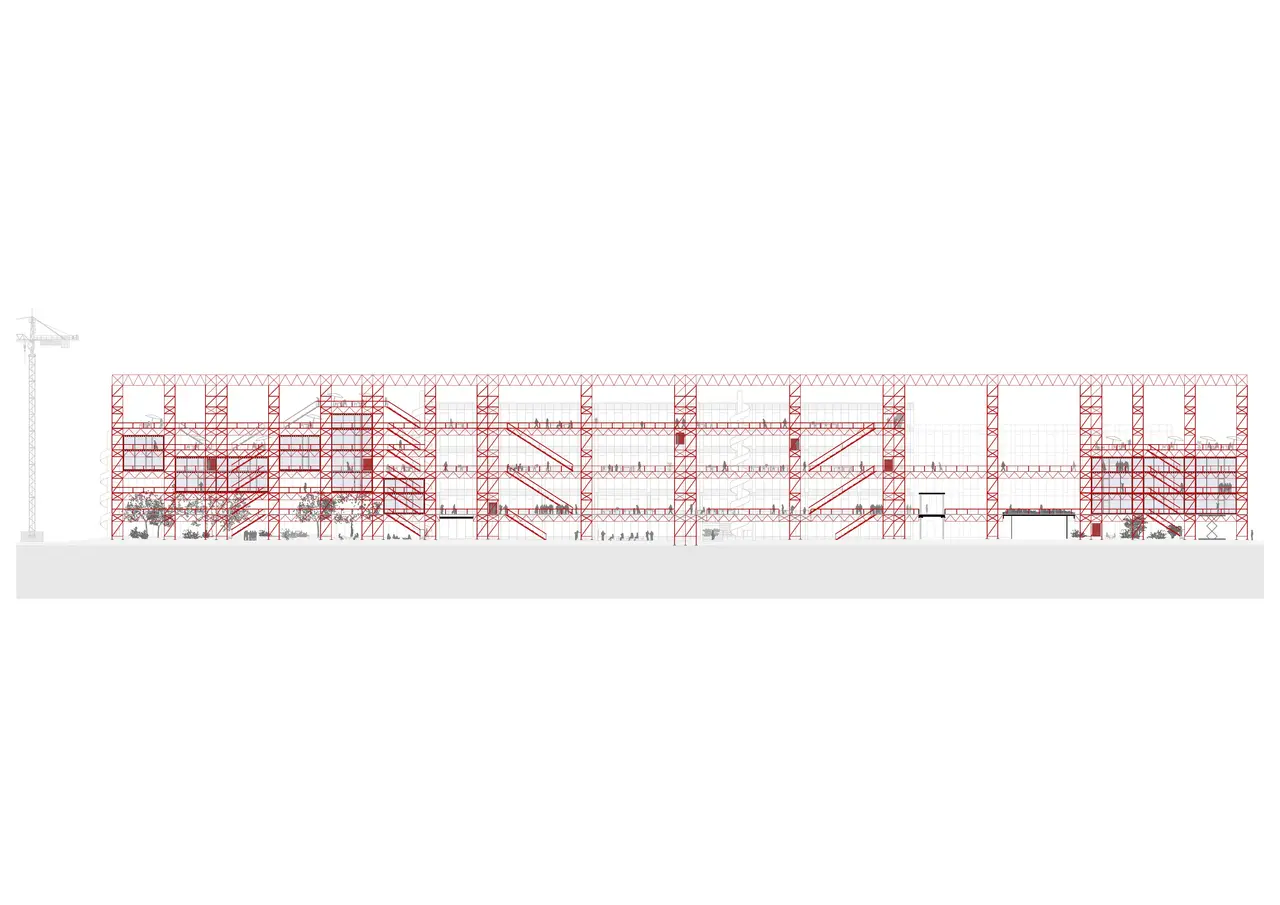
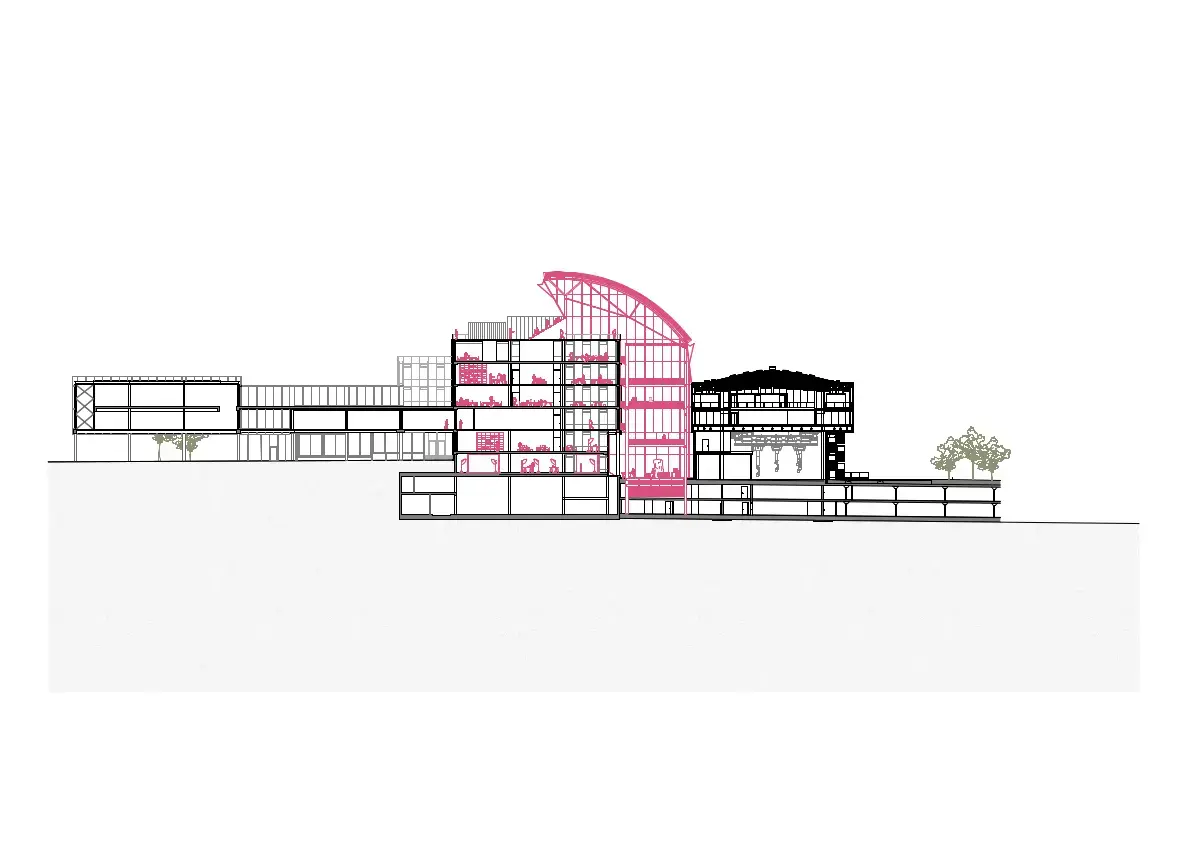
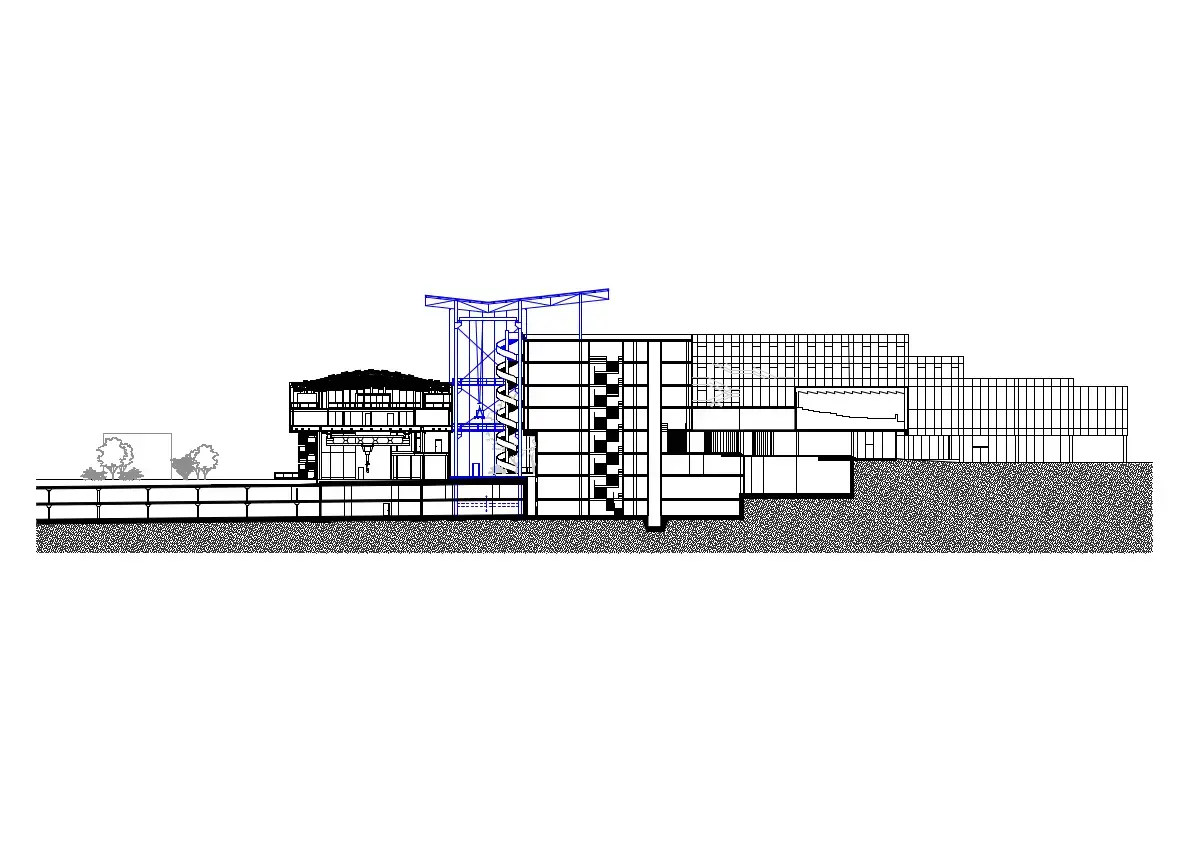
The project Ready-Unmade HIL was carried out during the Autumn Semester 2025 and Spring Semester 2026 at the Institute of Design and Architecture (IEA), Department of Architecture, ETH Zurich, under the direction of Prof. Débora Mesa Molina. The studio was led by Ludwig Albert, Victoria Collar Ocampo, Lida Freudenreich and Marcela Girotti. The following students participated: Ece Babucoglu, Leo Baumeler, Olivier Beaud, Idlir Begalla, Carlo Benucci, Marlon Bernegger, Bora Biro, Joy Blasig, Eleonora Brocal, Marla Brunner, Rahel Büchi, Elias Bühlmann, Luca Cereghetti, Eranda Daci, Nderim Dakaj, Gian De Nisco, Yuliya Degtyaryova, Vinciane Deslarzes, Charles Dubey, Melanie Frei, Malina Gashi, Jonas Gerny, Agnese Ghezzi, David Gnehm, Giorgio Guiducci, Svenja Hasslinger, Sofie Heinzl, Philip Henning, Peer Hess, Simona Hippenmeyer, Léa Holcbecher, Jonas Hostettler, Anduel Hoxha, Fabio Insalaco, Viviane Itten, Flurin Job, Sebastian Junger, Moritz Langsch, Lea Ljubic, Lars Lumer, Linda Lüttin, Yanis Mameli, Miguel Märchy, Luis Pablo Matheu Umaña, Karim Maziad, Matteo Meier, Larissa Mayara Meister, Elia Mele, Joel Monteiro Vilas Boas, Sina Mund, Gaia Musini, Thomas Näf, Sébastien Napierala, Ivan Neher, Daphne Nicolakis, Laura Plluzhina, Maria Pop, Enrico Pugliese, Mea Quint, Paula Reisegger, Julia Ritter, Fidel Romer, Trera Rudek, Nicolas Rutz, Matilda Schauer, Carmen Scherer, Tiberius Schneider, Mario Sergi, Sofia Sologuren Jauregui, Yannis Spaar, Jael Spalinger, Stefan Stojcevski, Bénédict Stüdi, Renaud Taminiau, Eunice Trinidad, Dominik Ulrich, David Vo, Alexander Vollenweider, Tibor Weber, Sophie Wehlen, Fabienne Wehrle, Seraina Wethli, Anouk Widmer, Lorenz Wieland, Chelsea Wullschleger, Pelin Yilmaz and Analisa Zwahlen.
A Pedagogical Journey
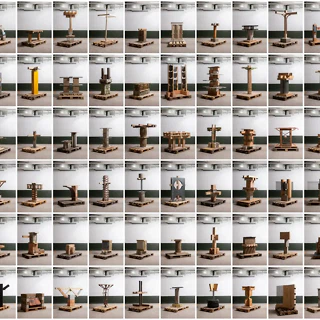
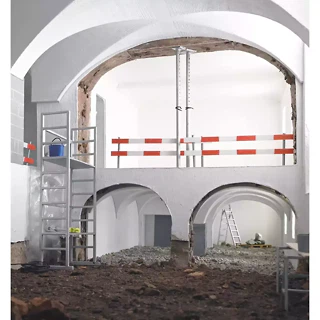
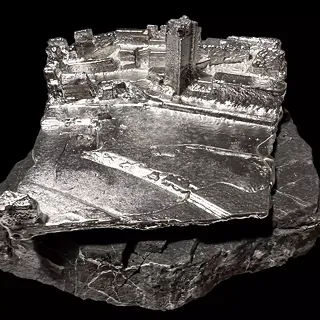
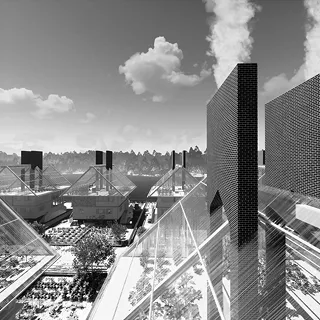
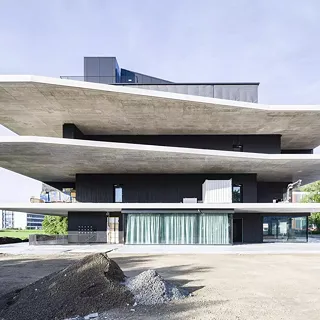
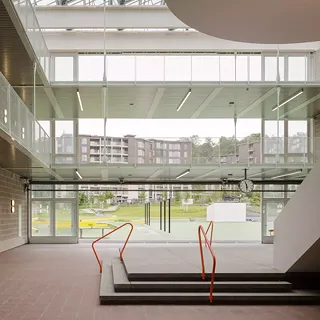
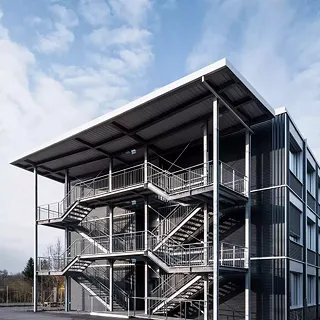
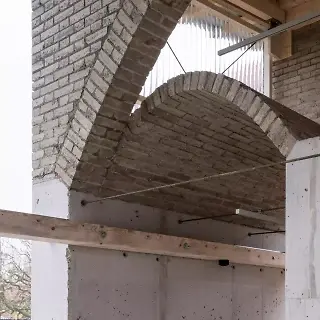
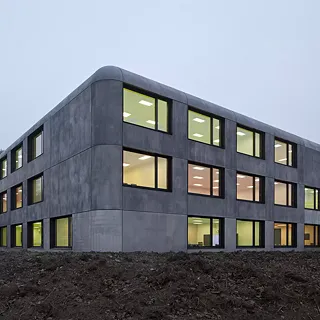
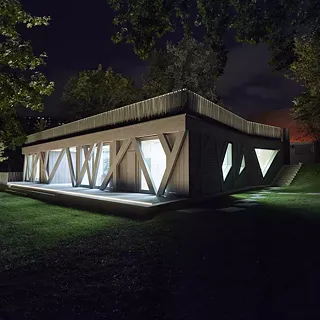
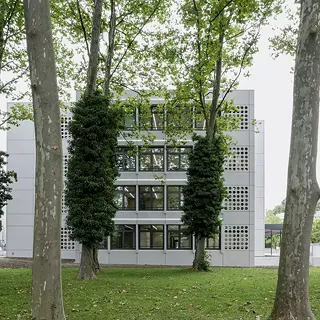
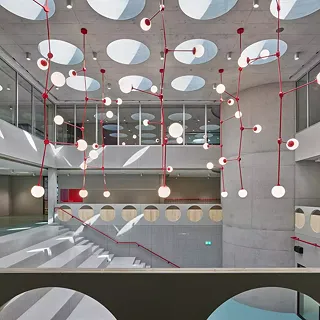
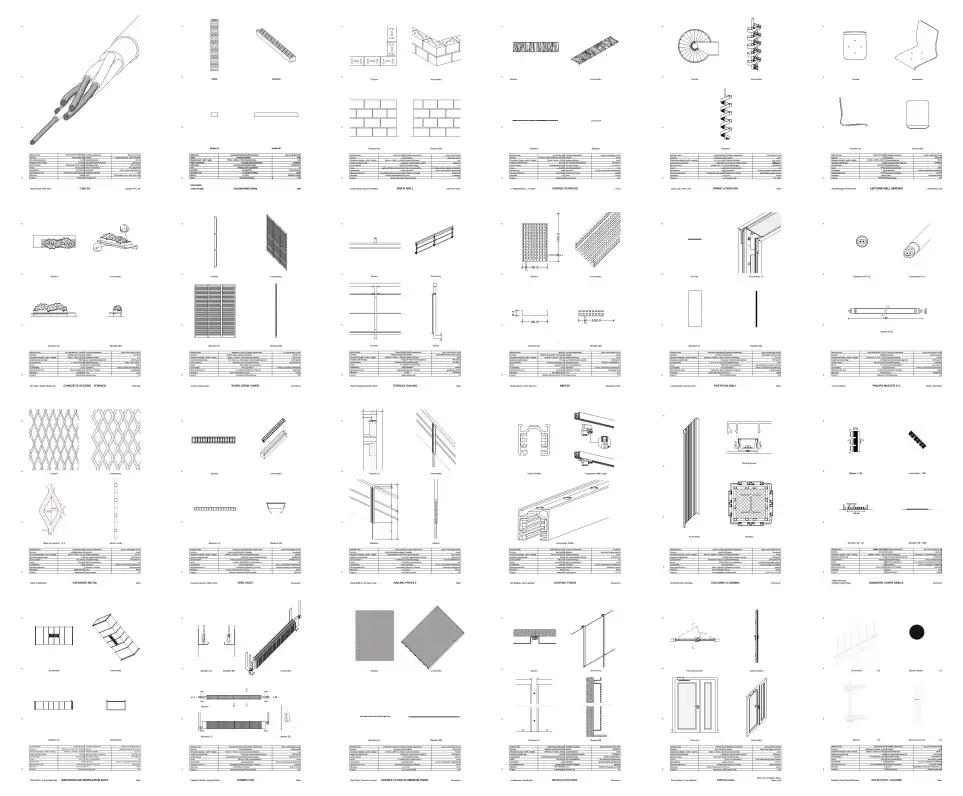
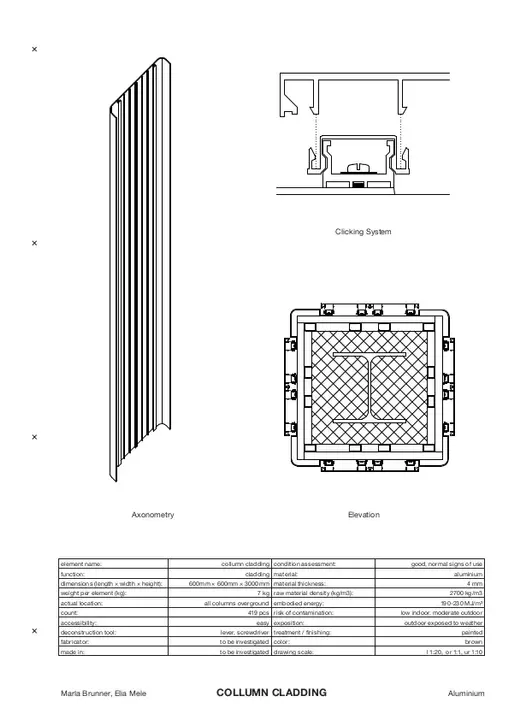
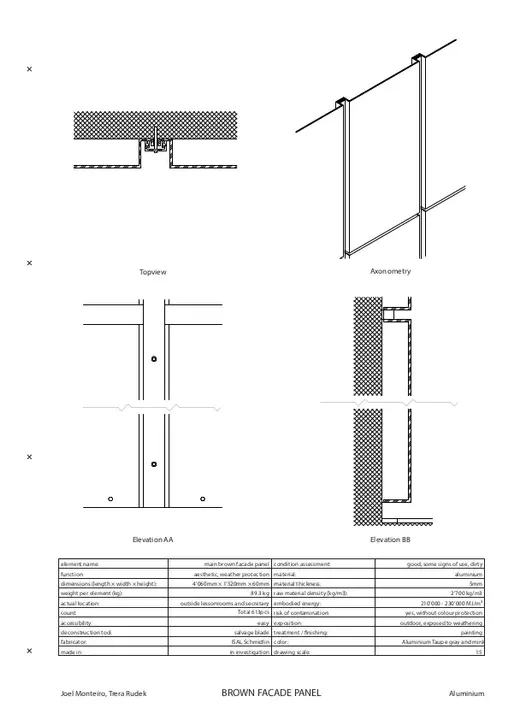
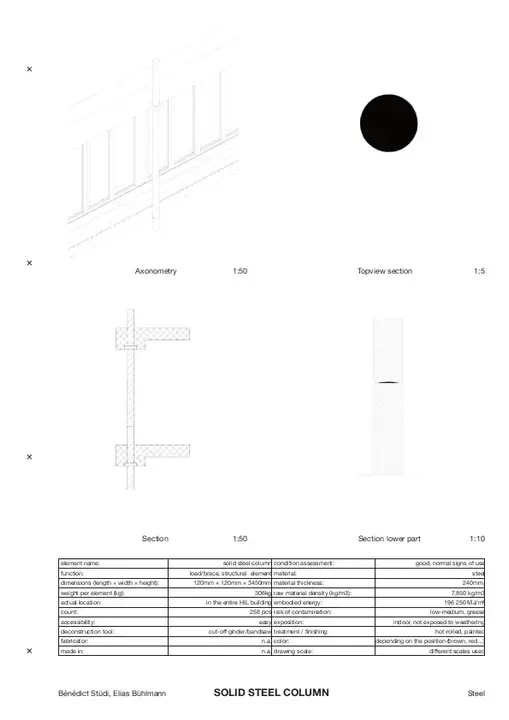
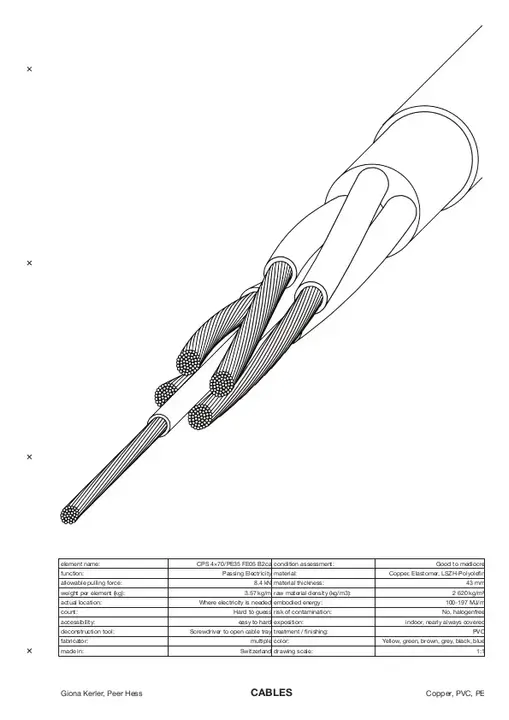
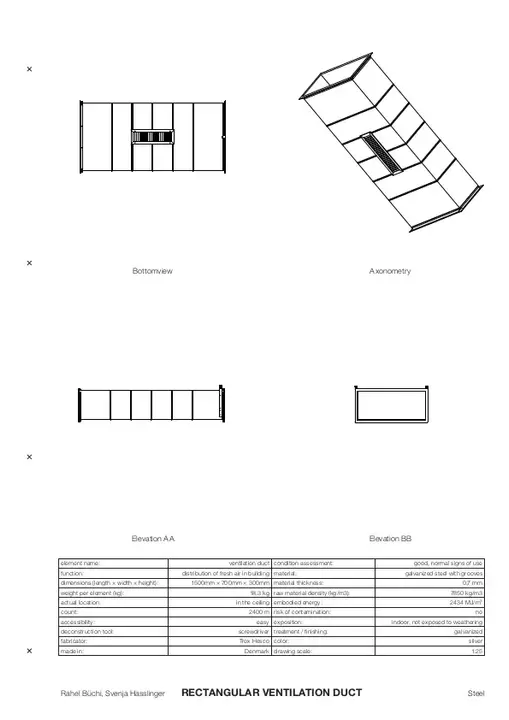
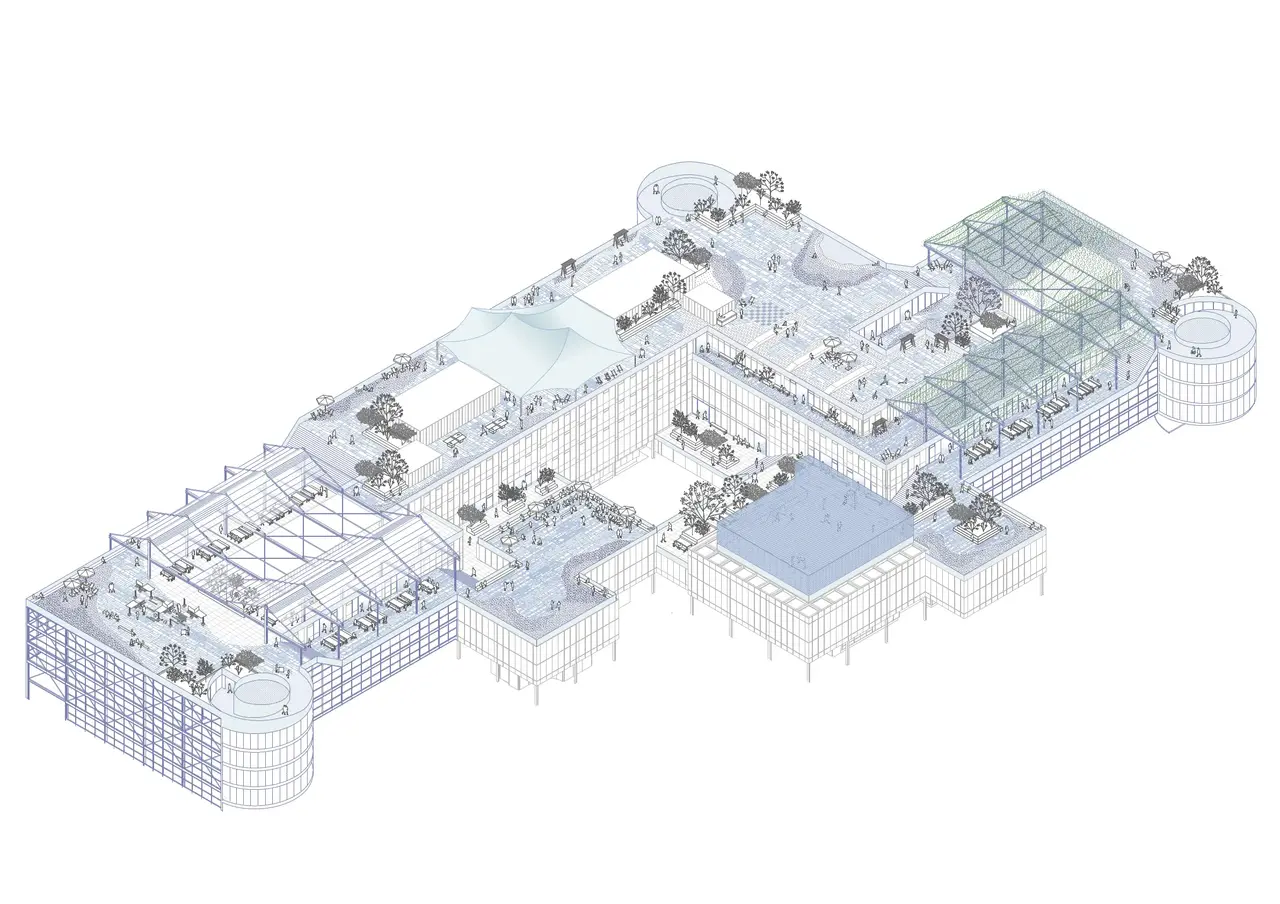
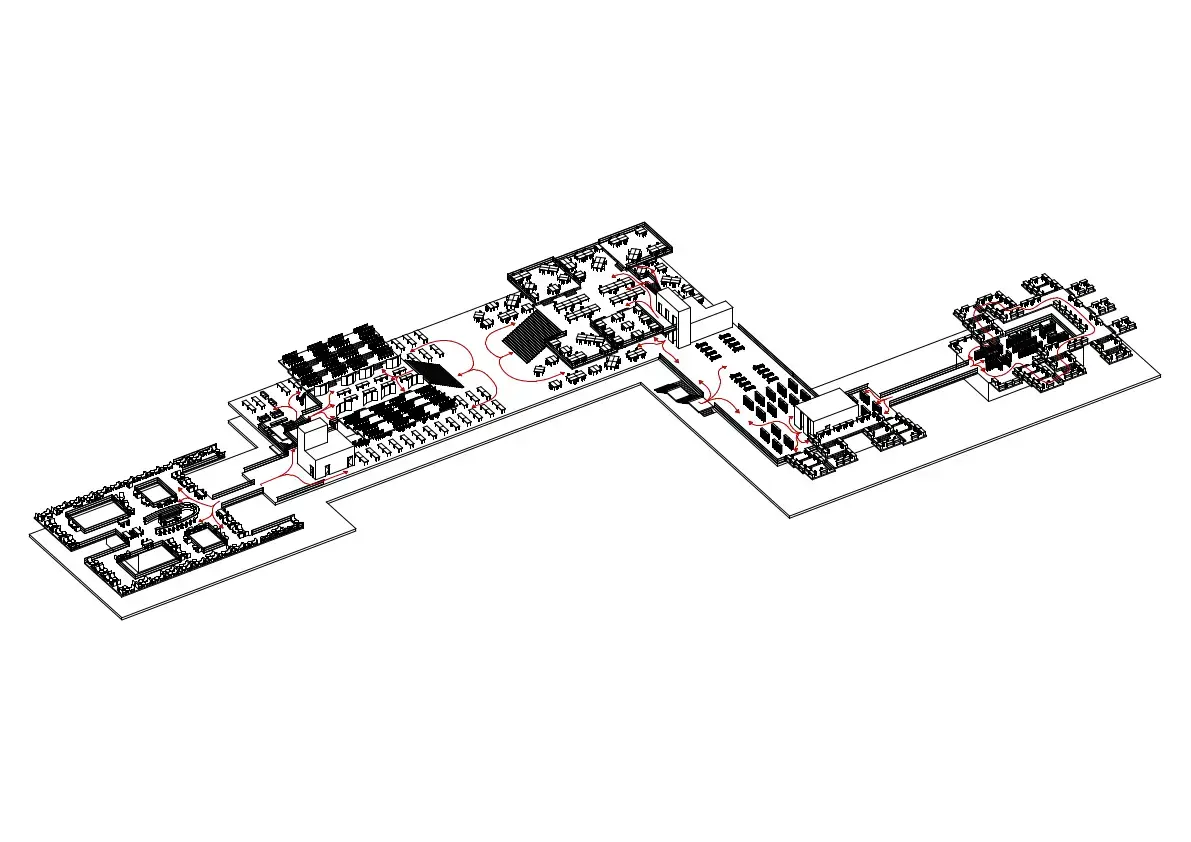
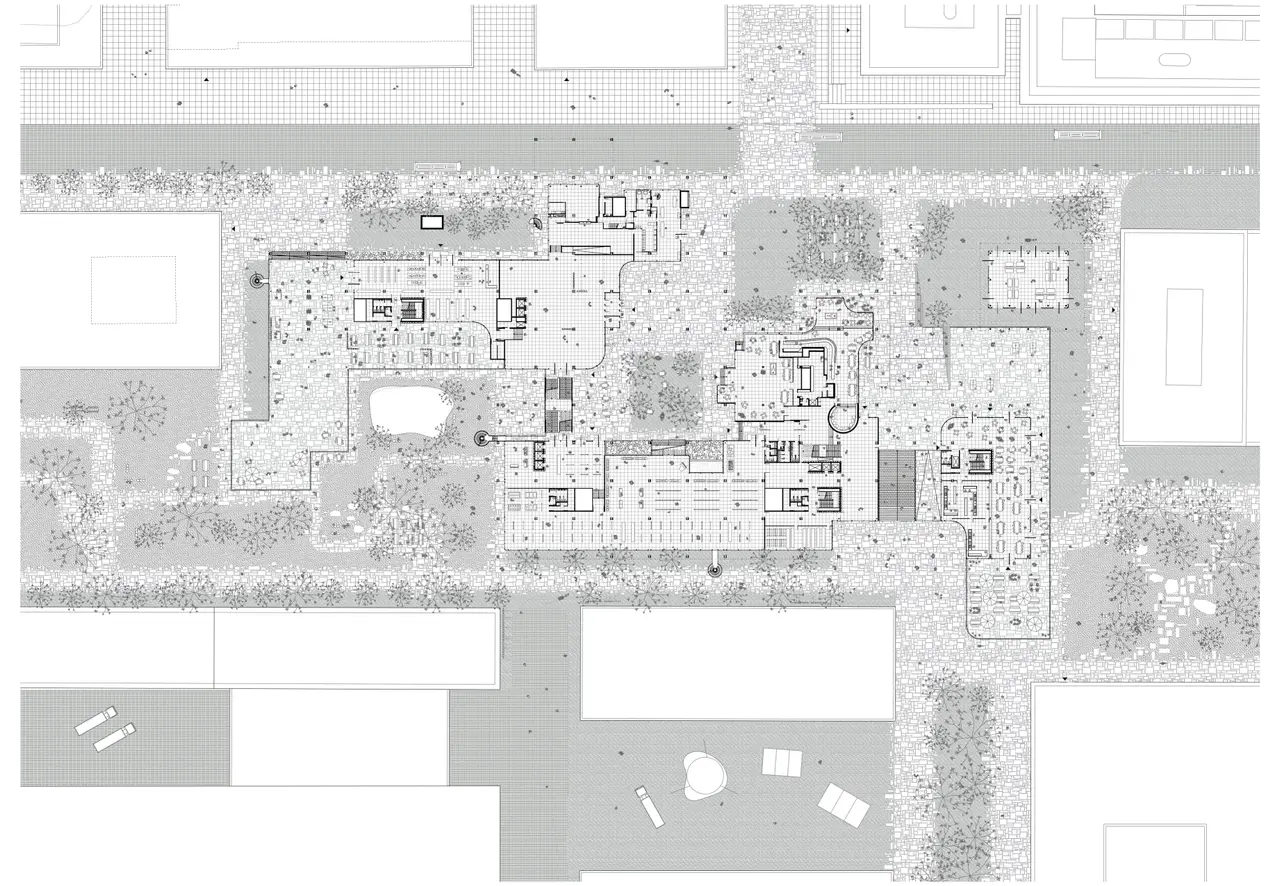
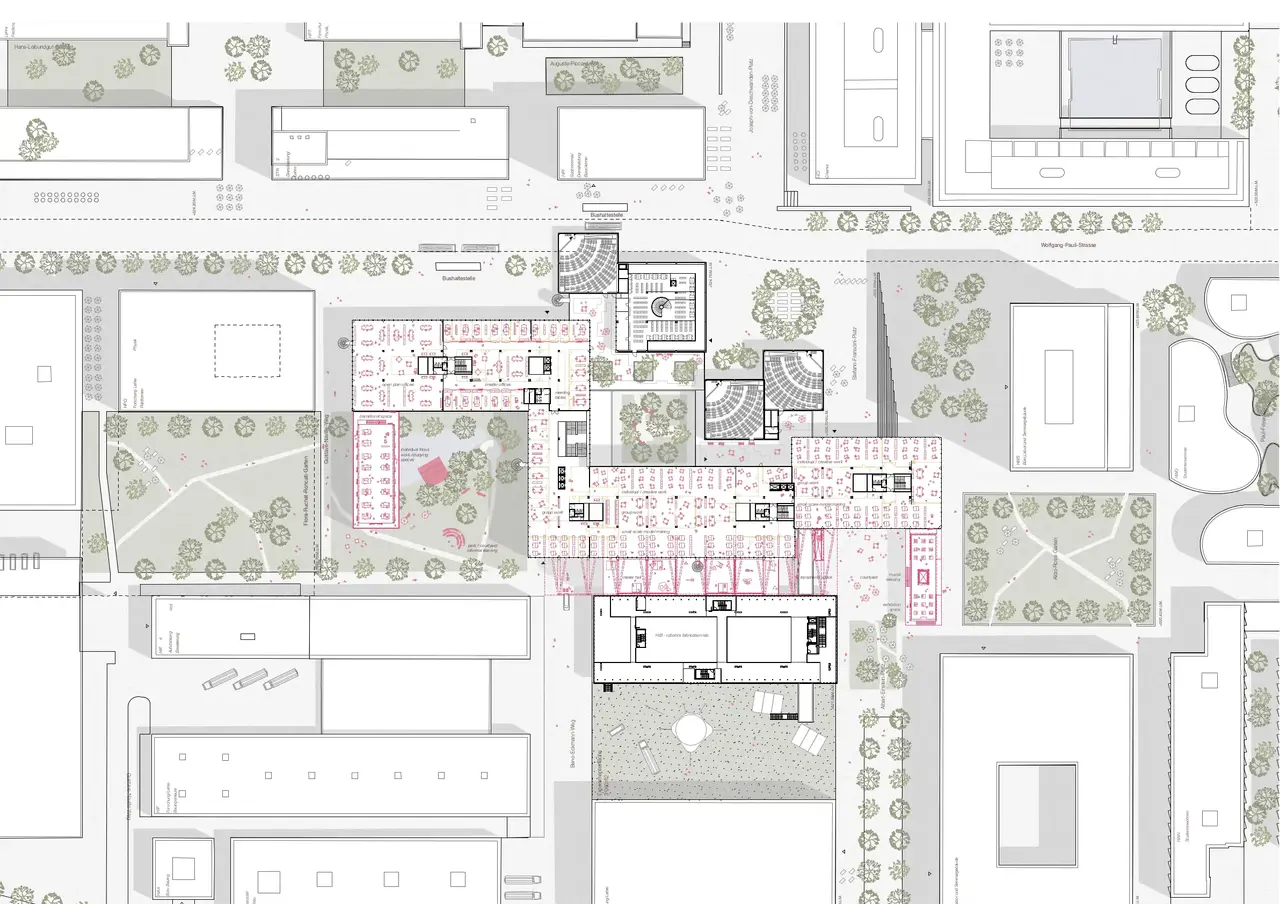
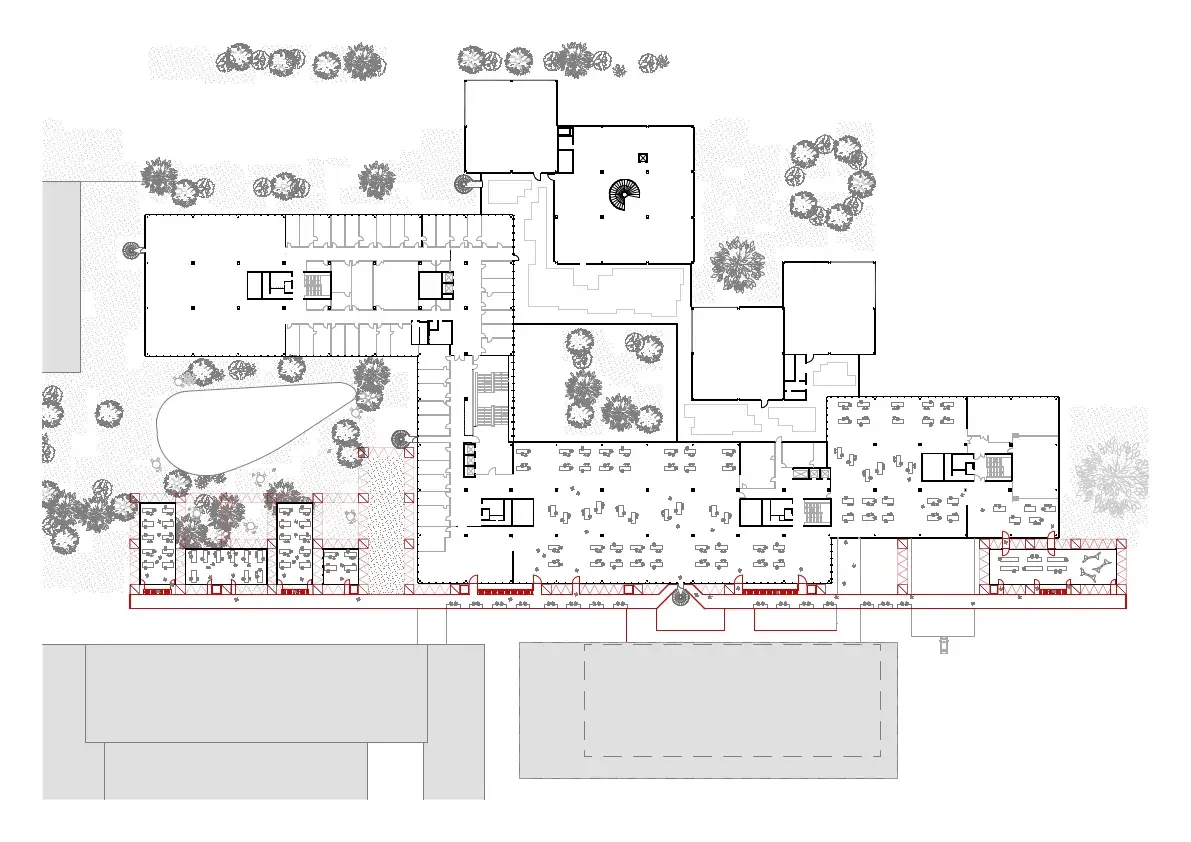
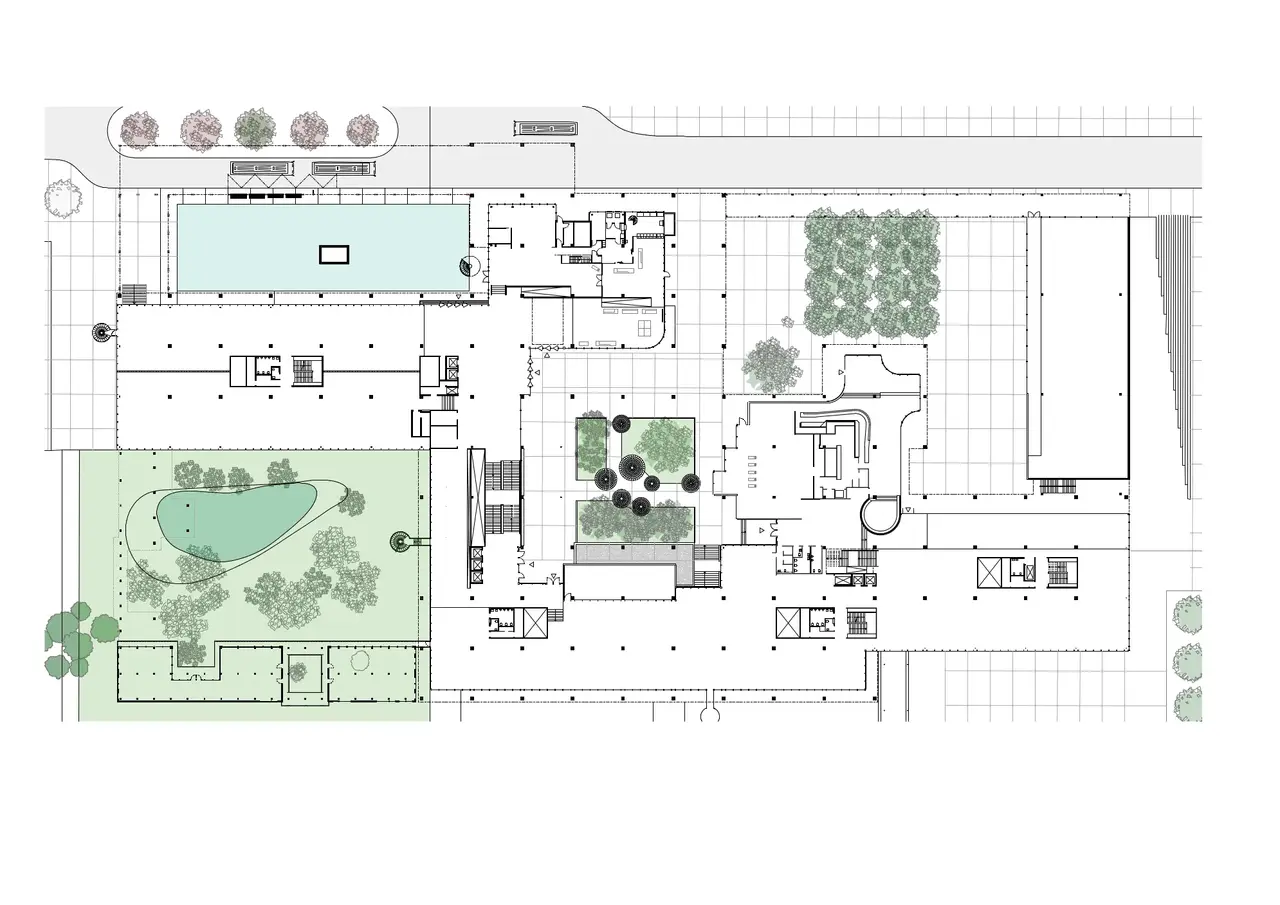
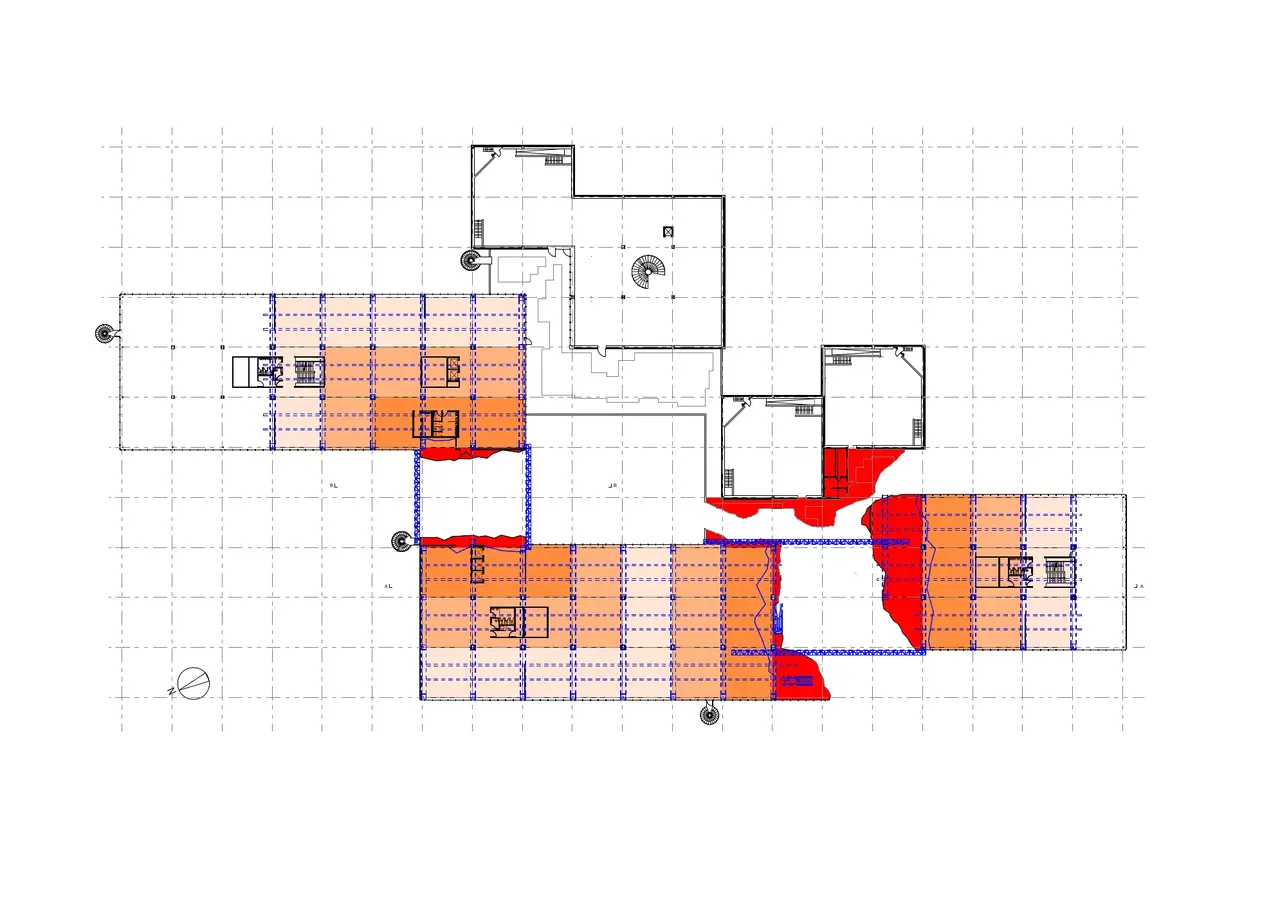
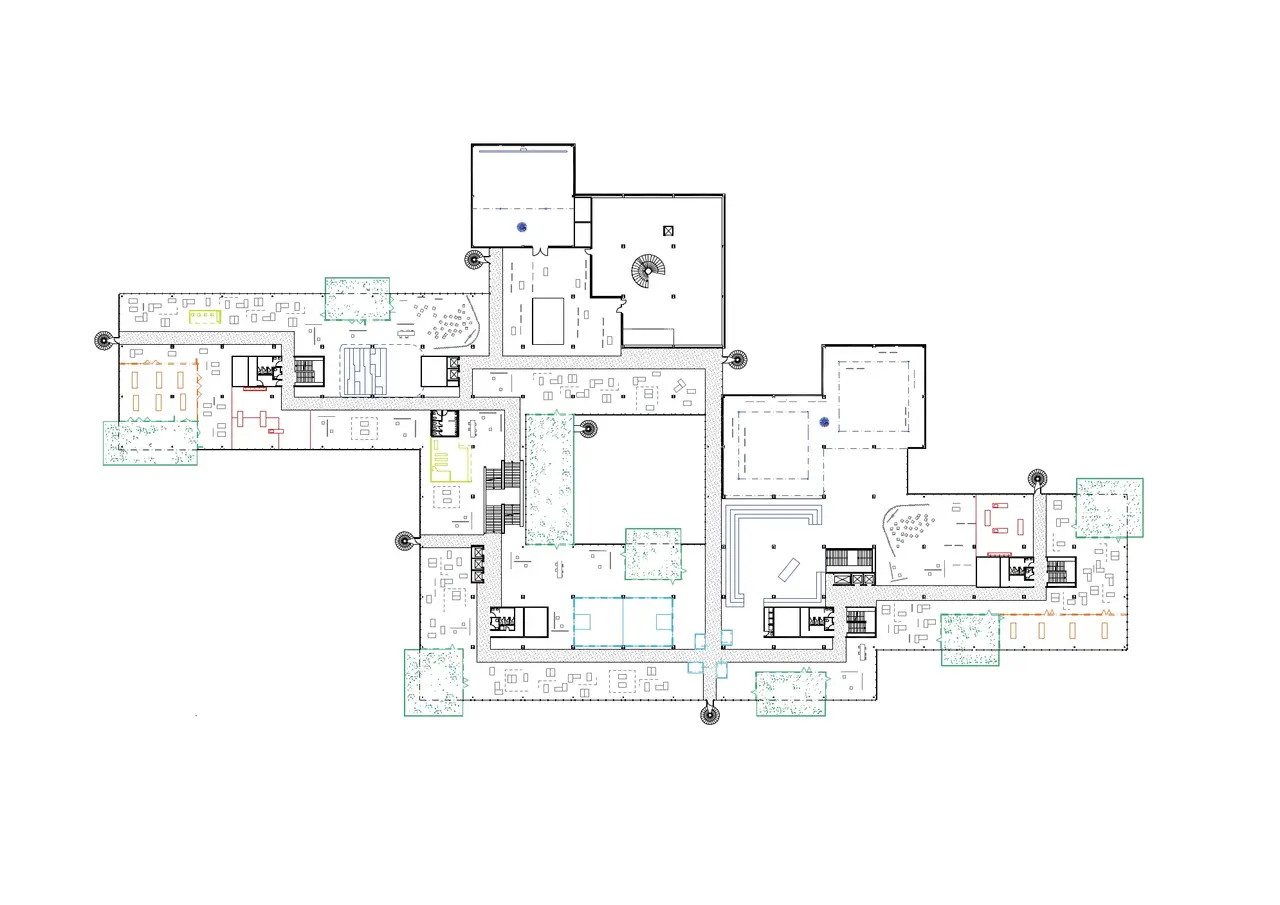
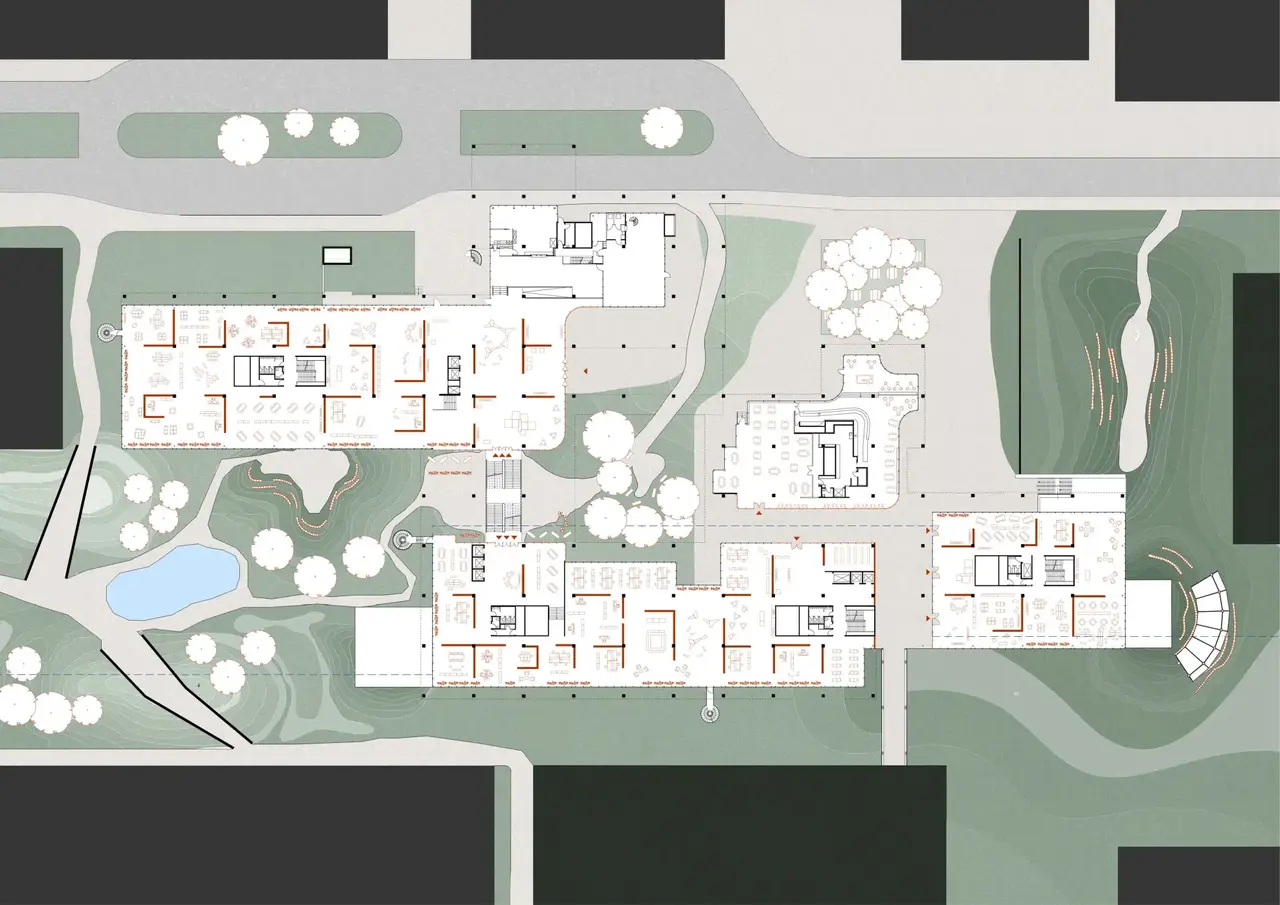
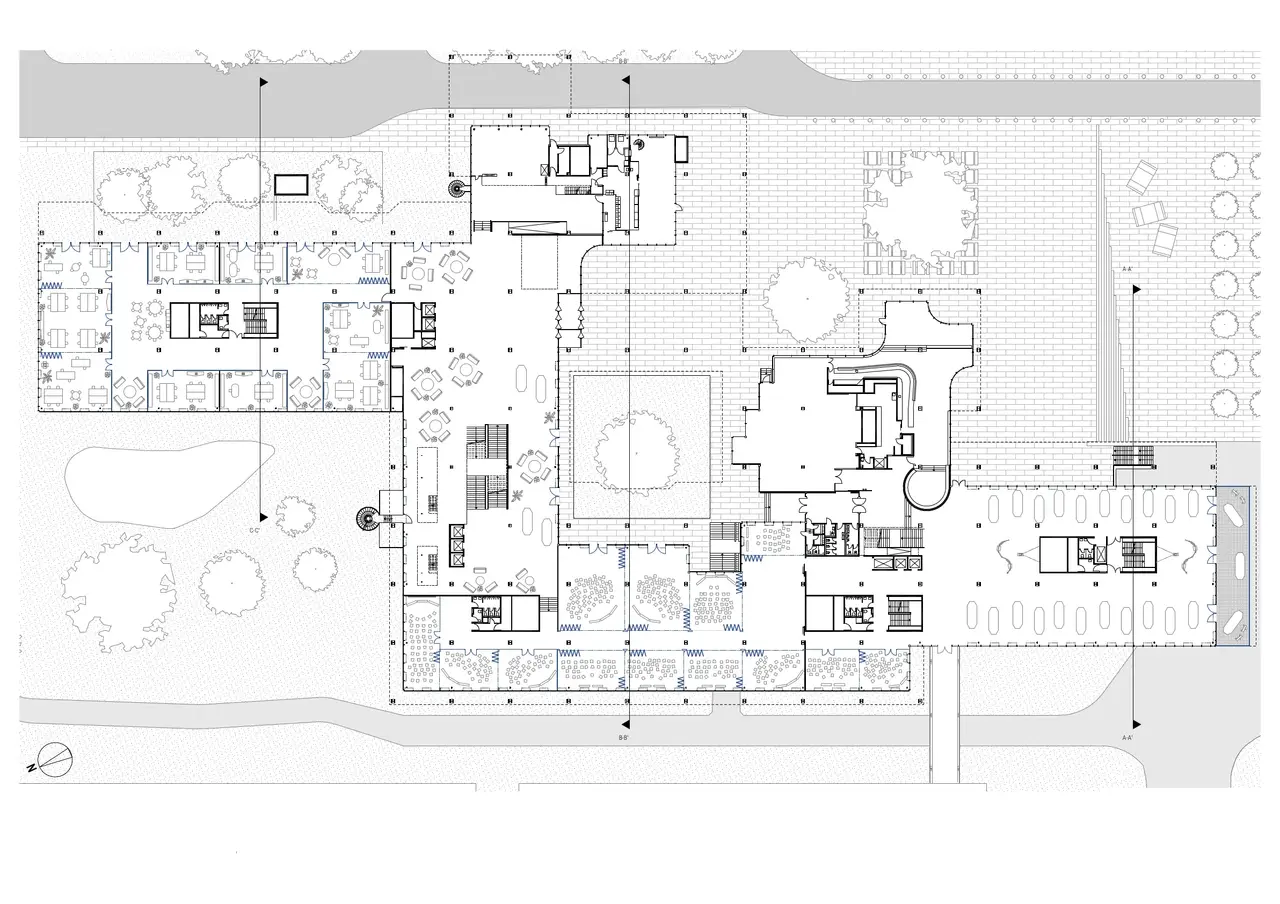
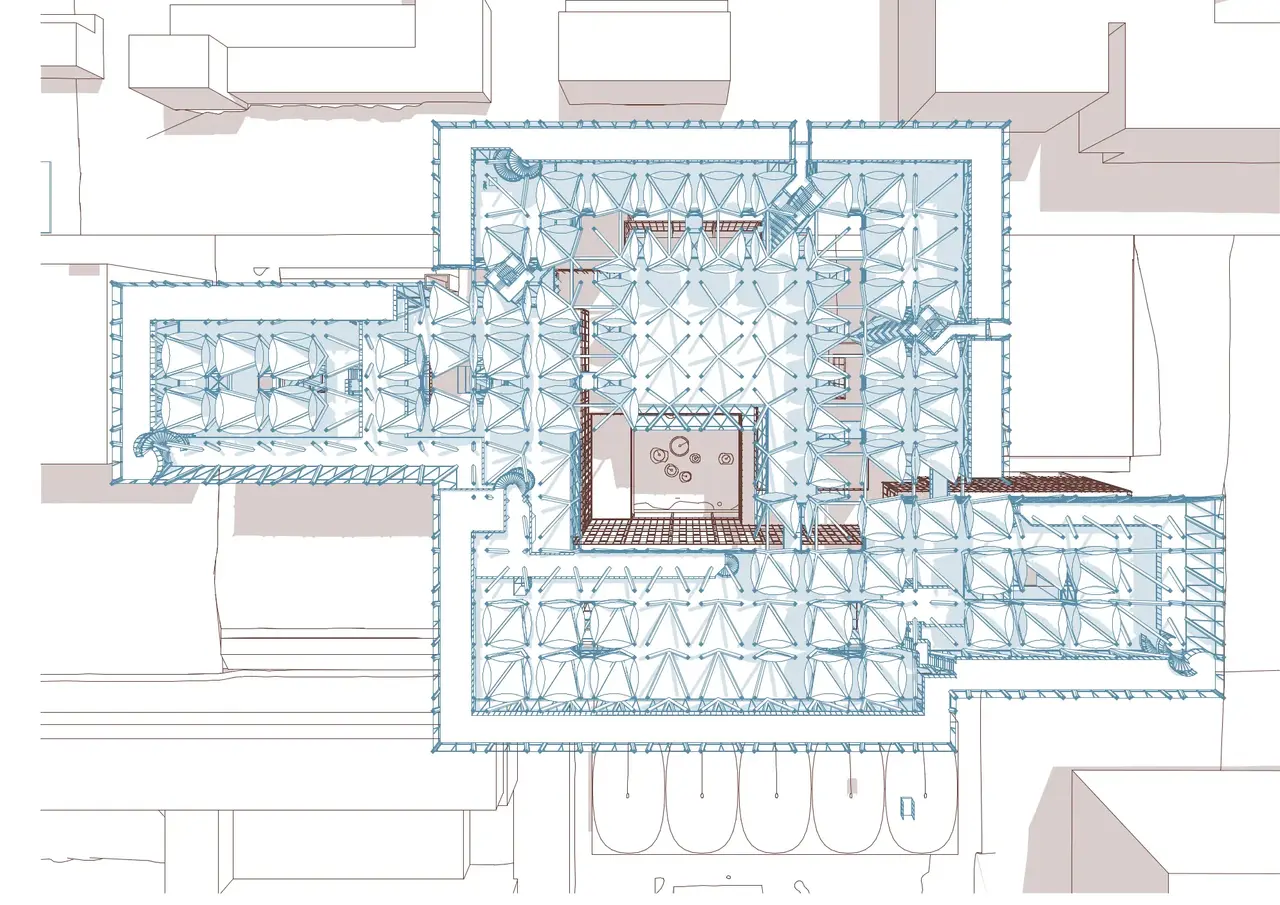
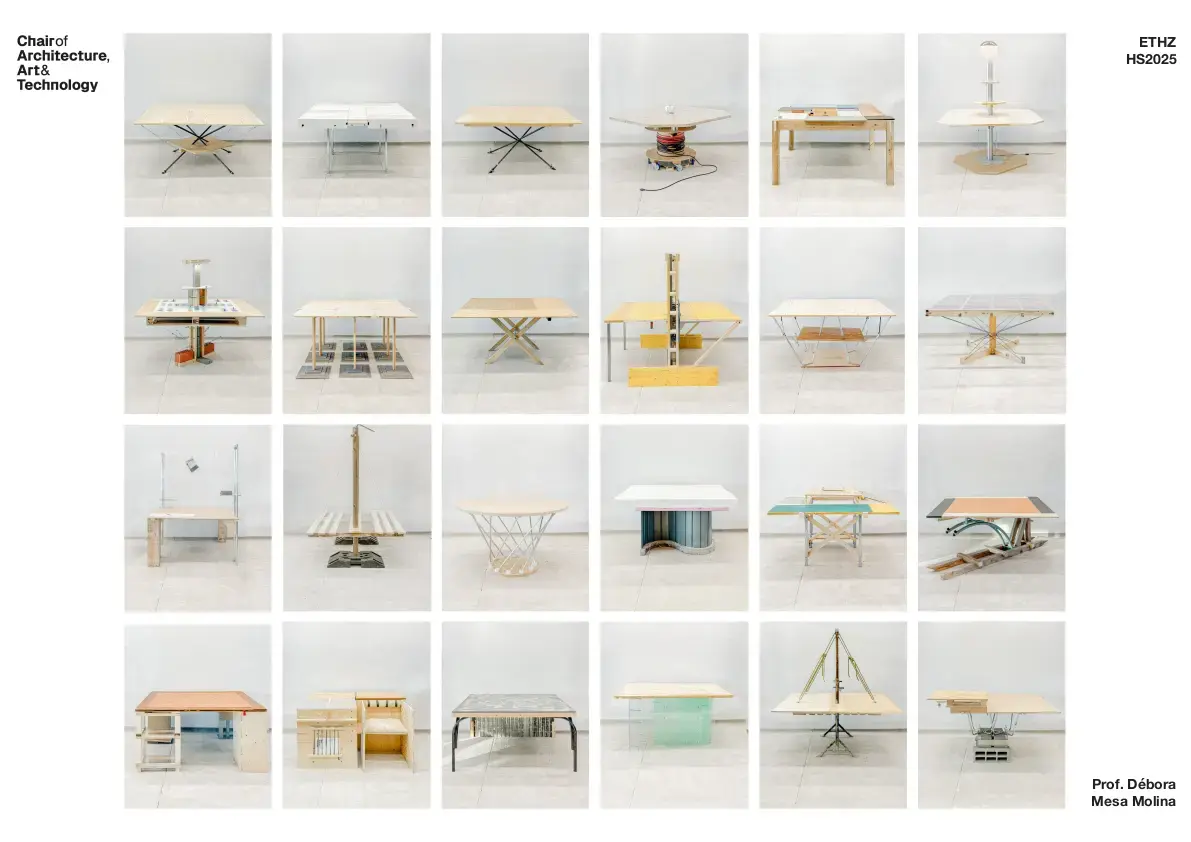
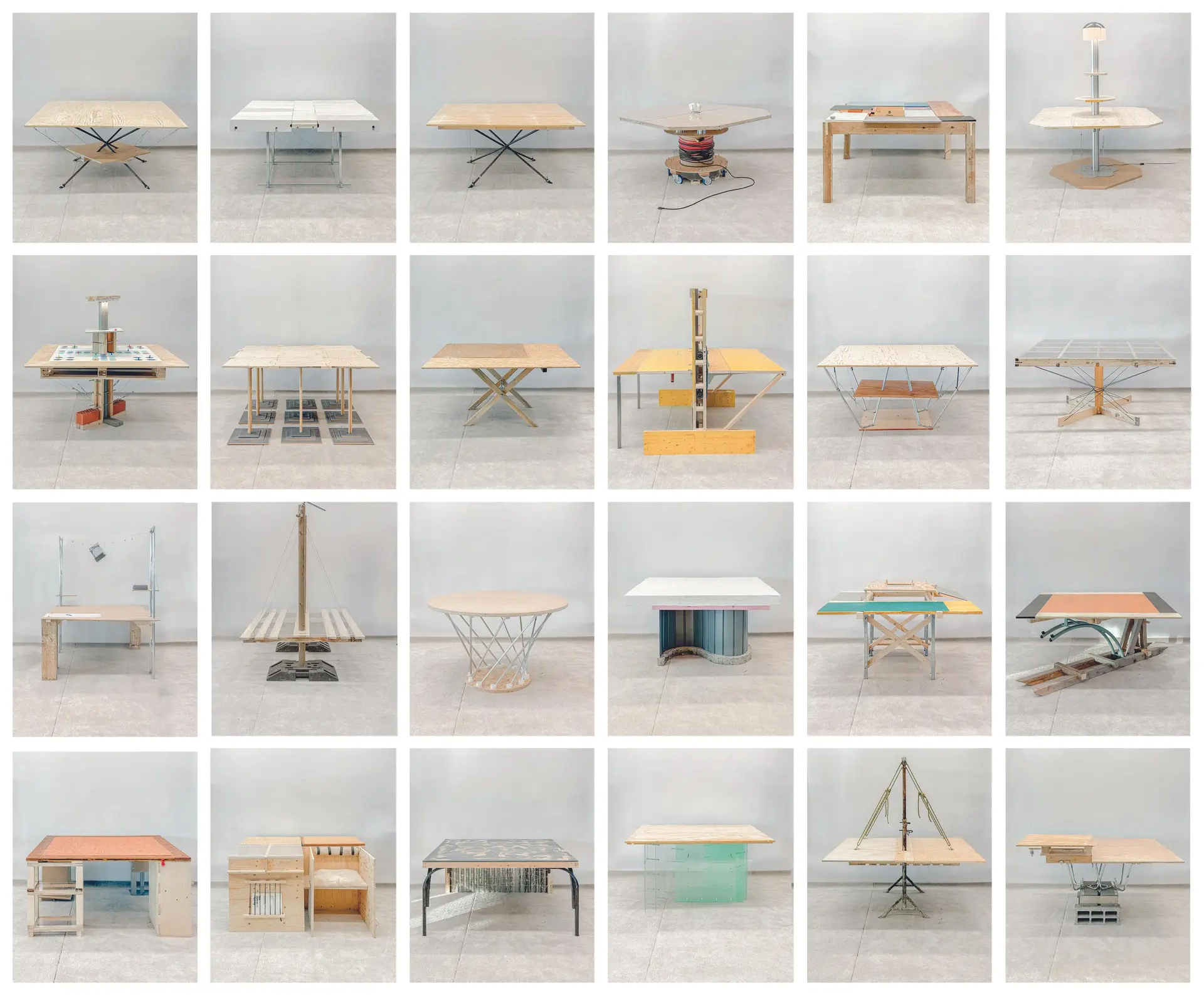
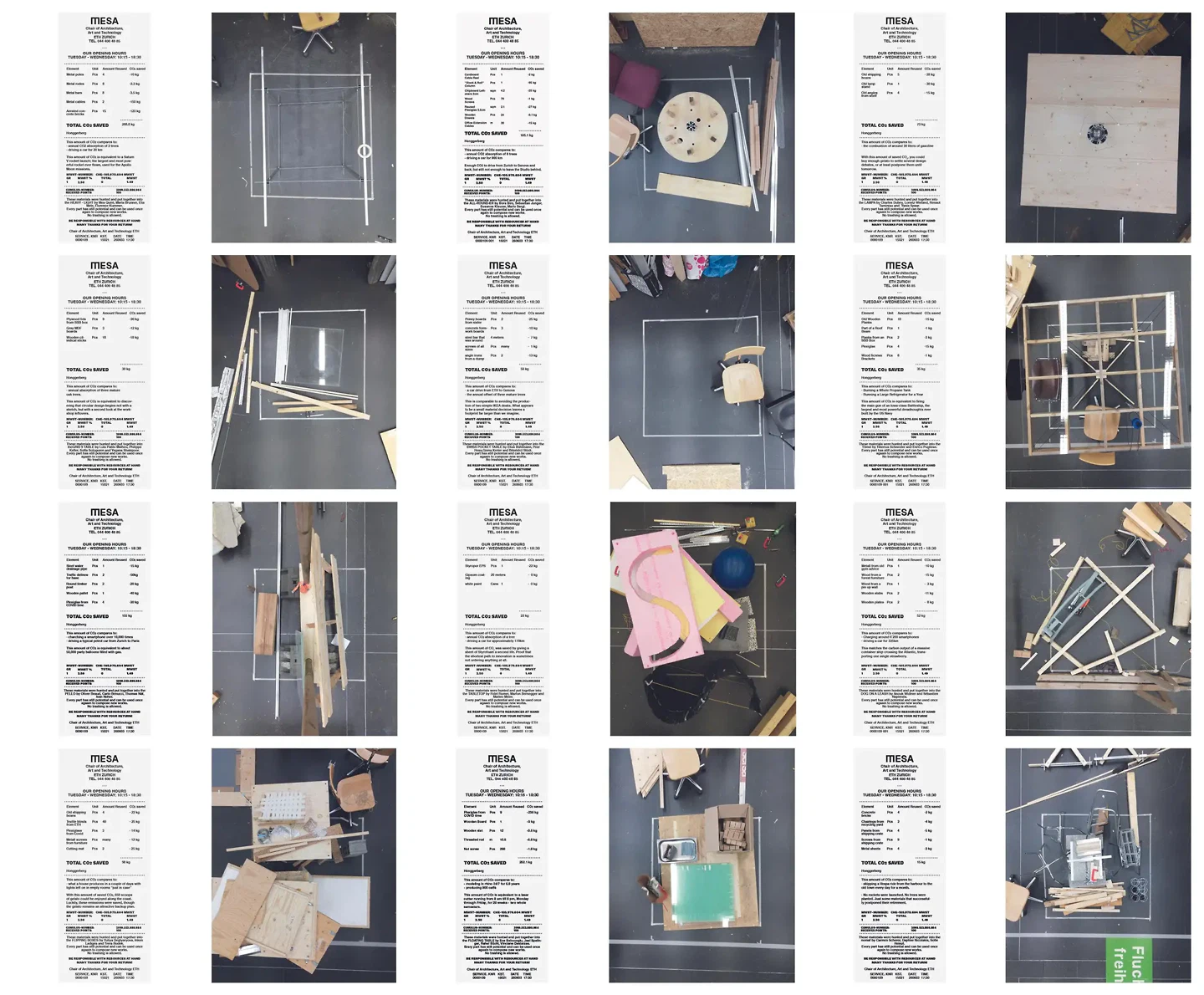
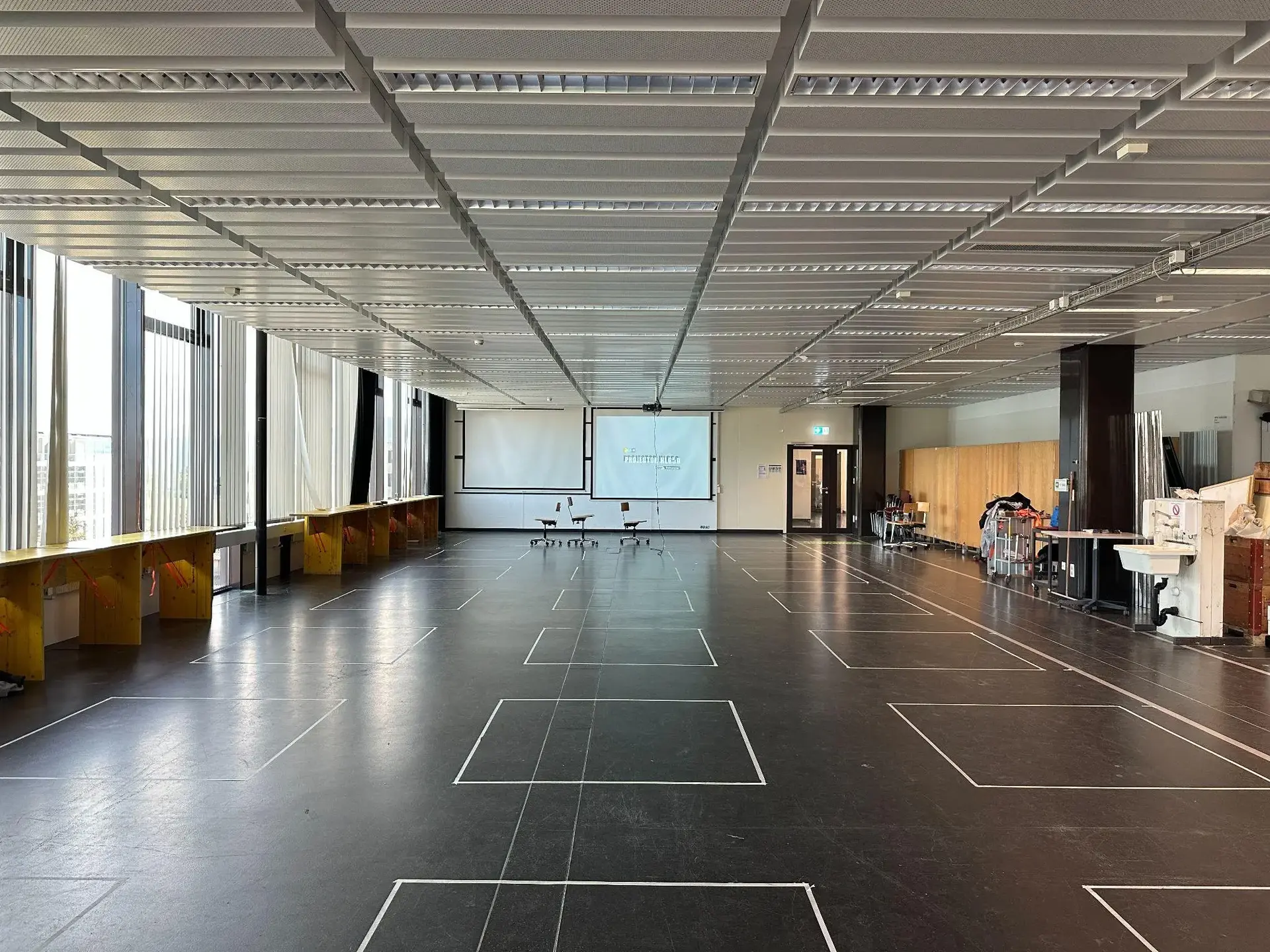
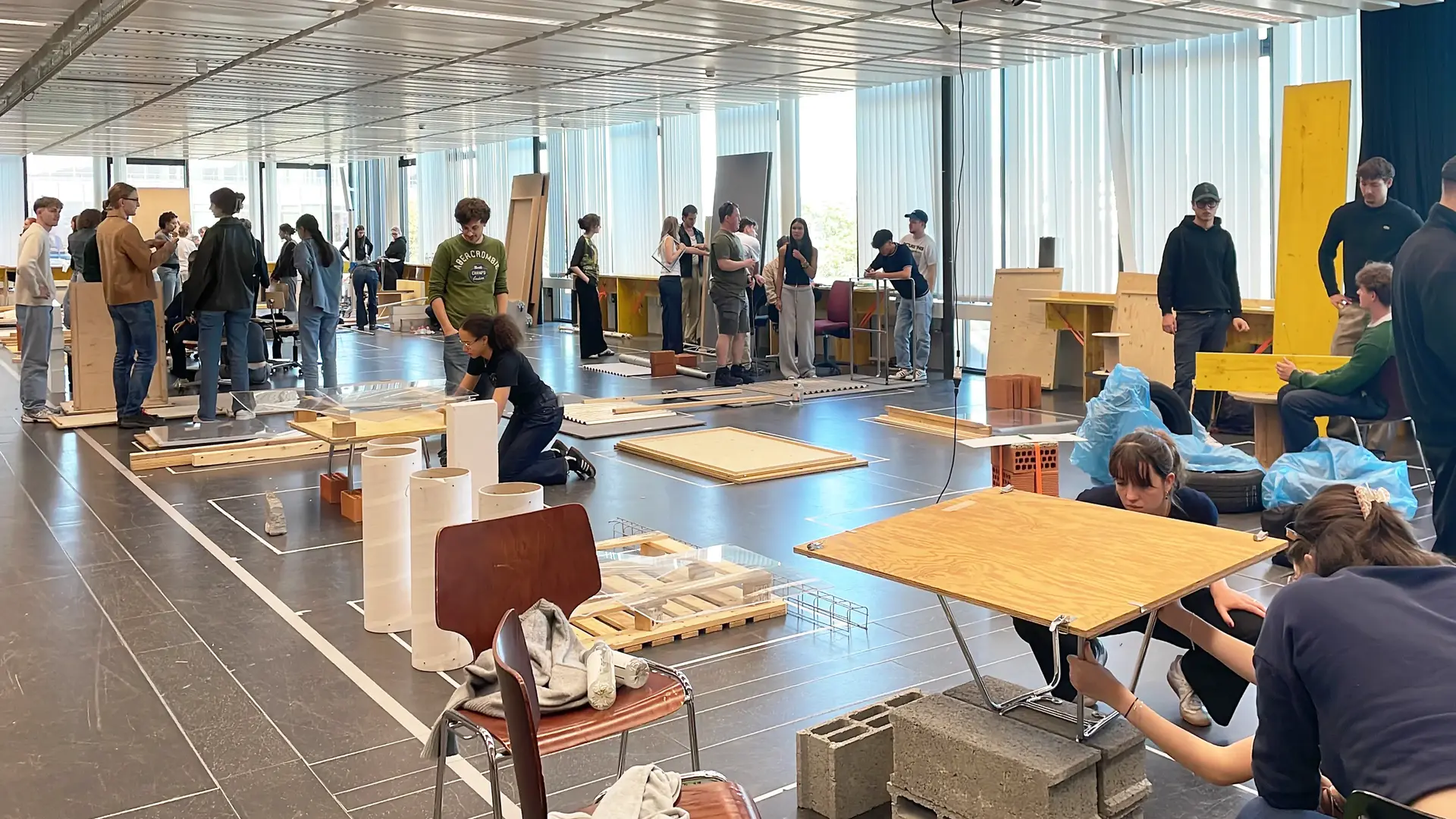
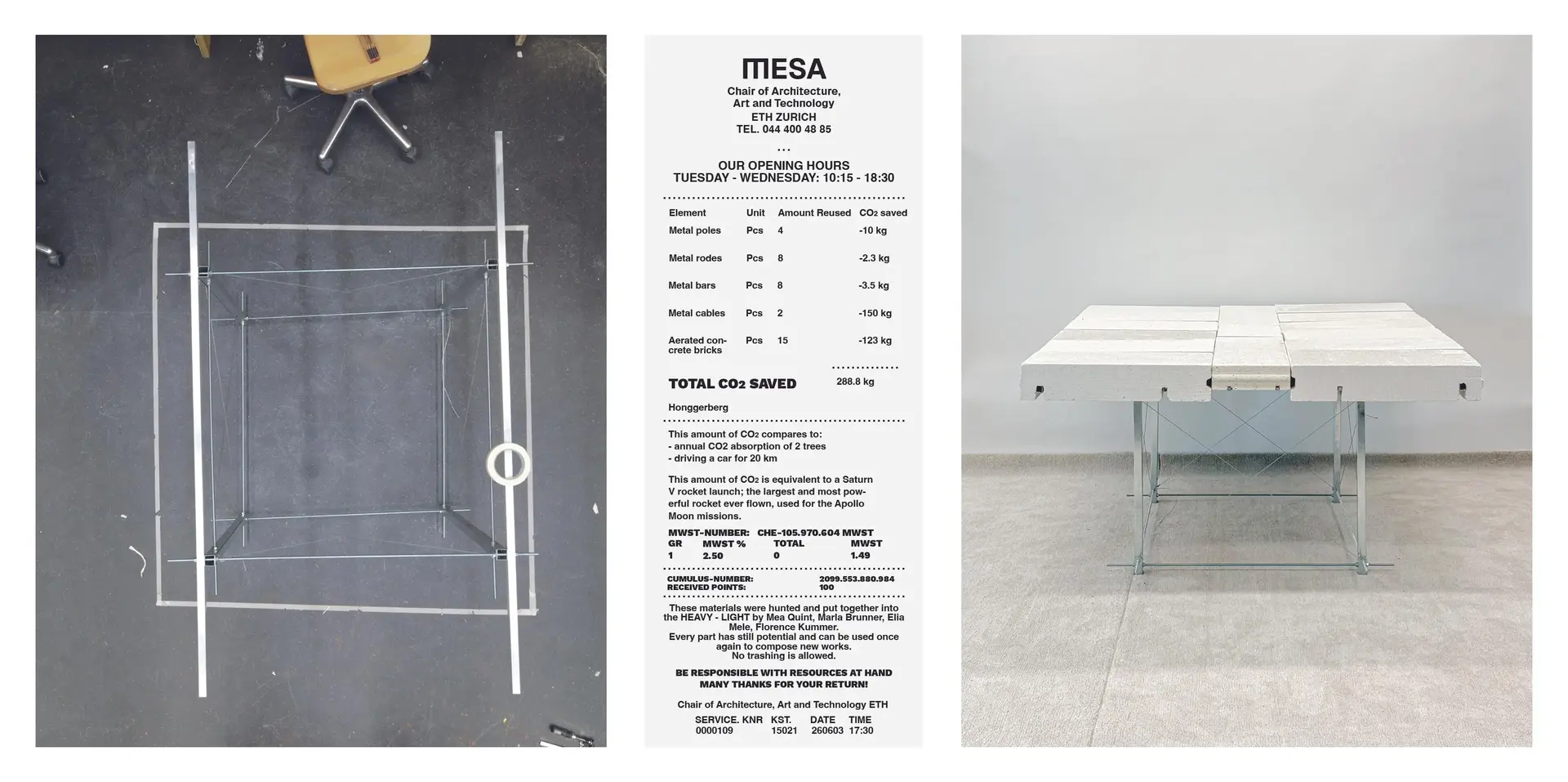
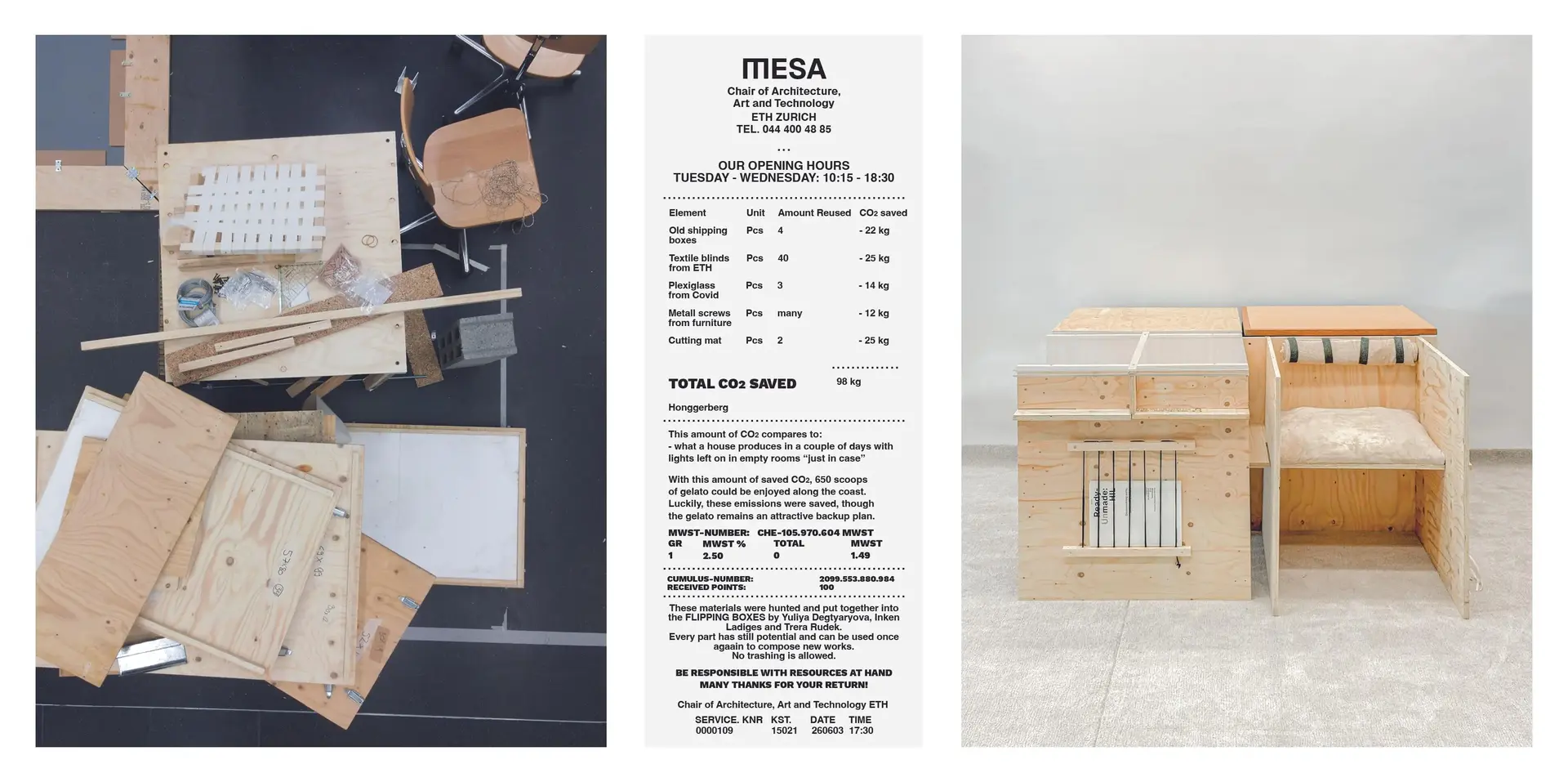
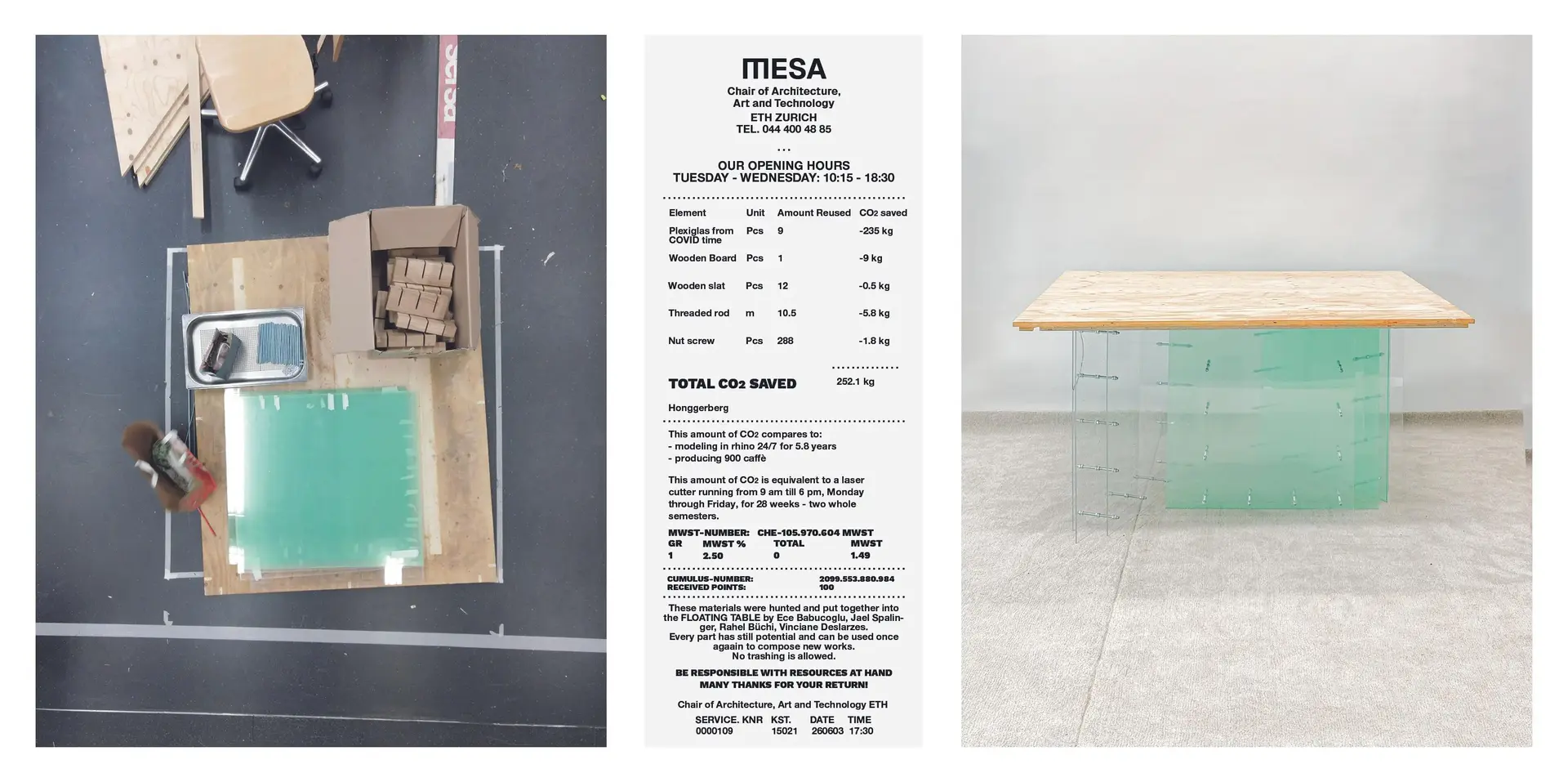
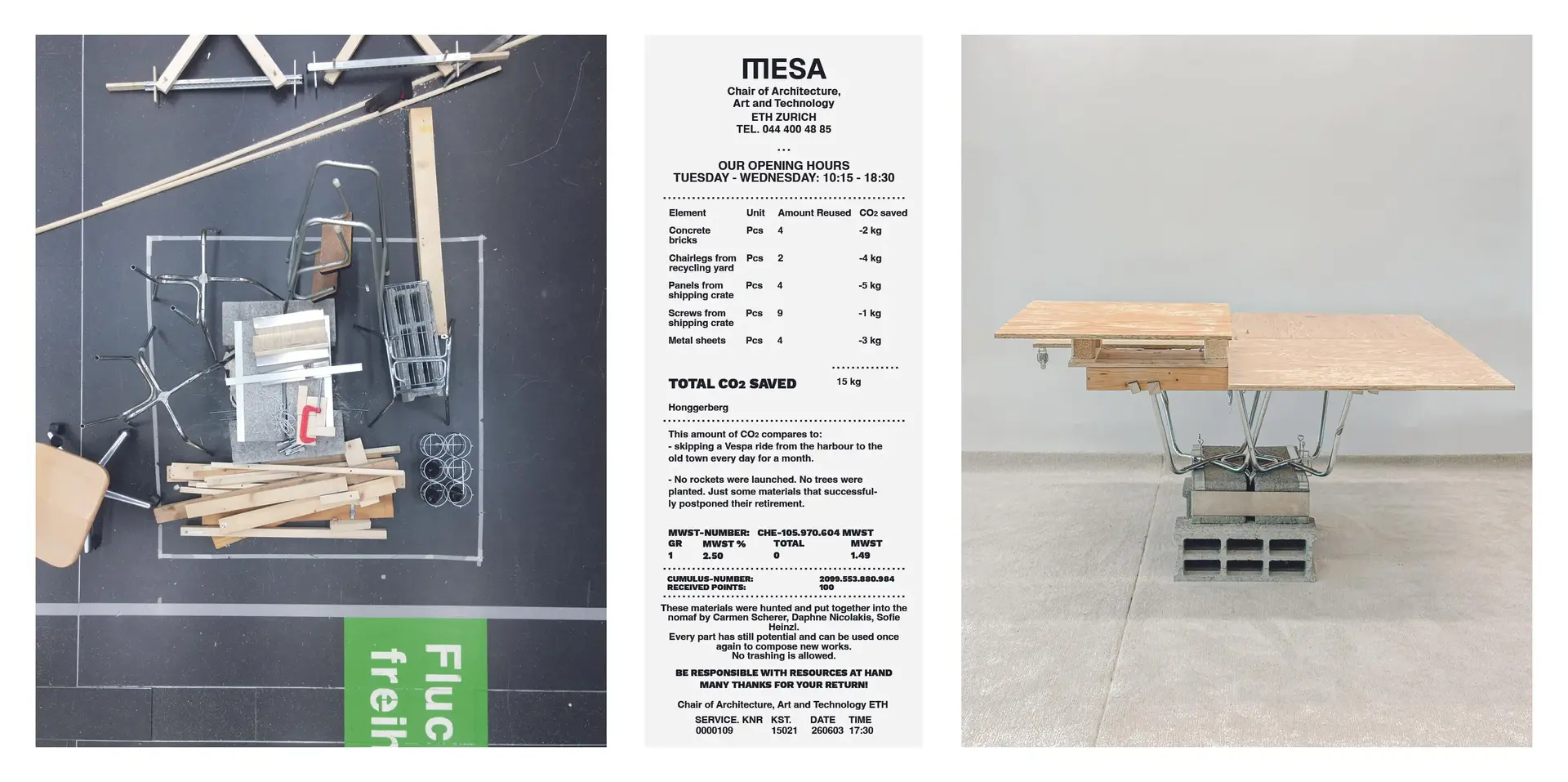
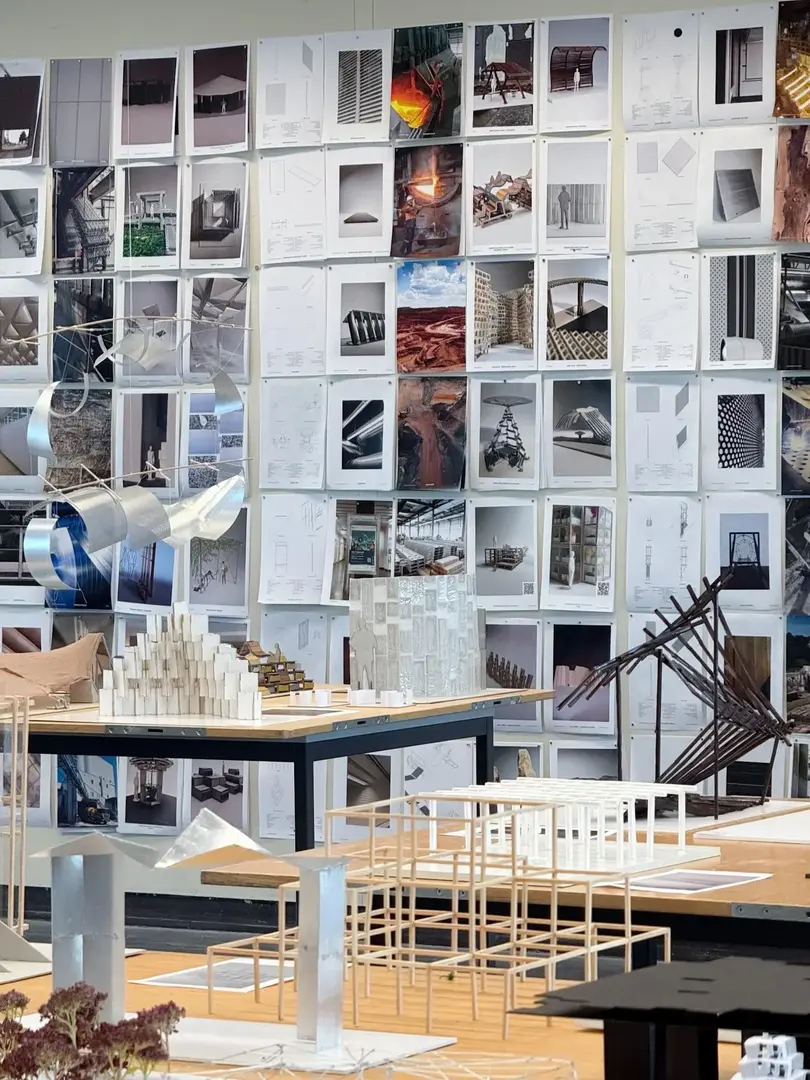
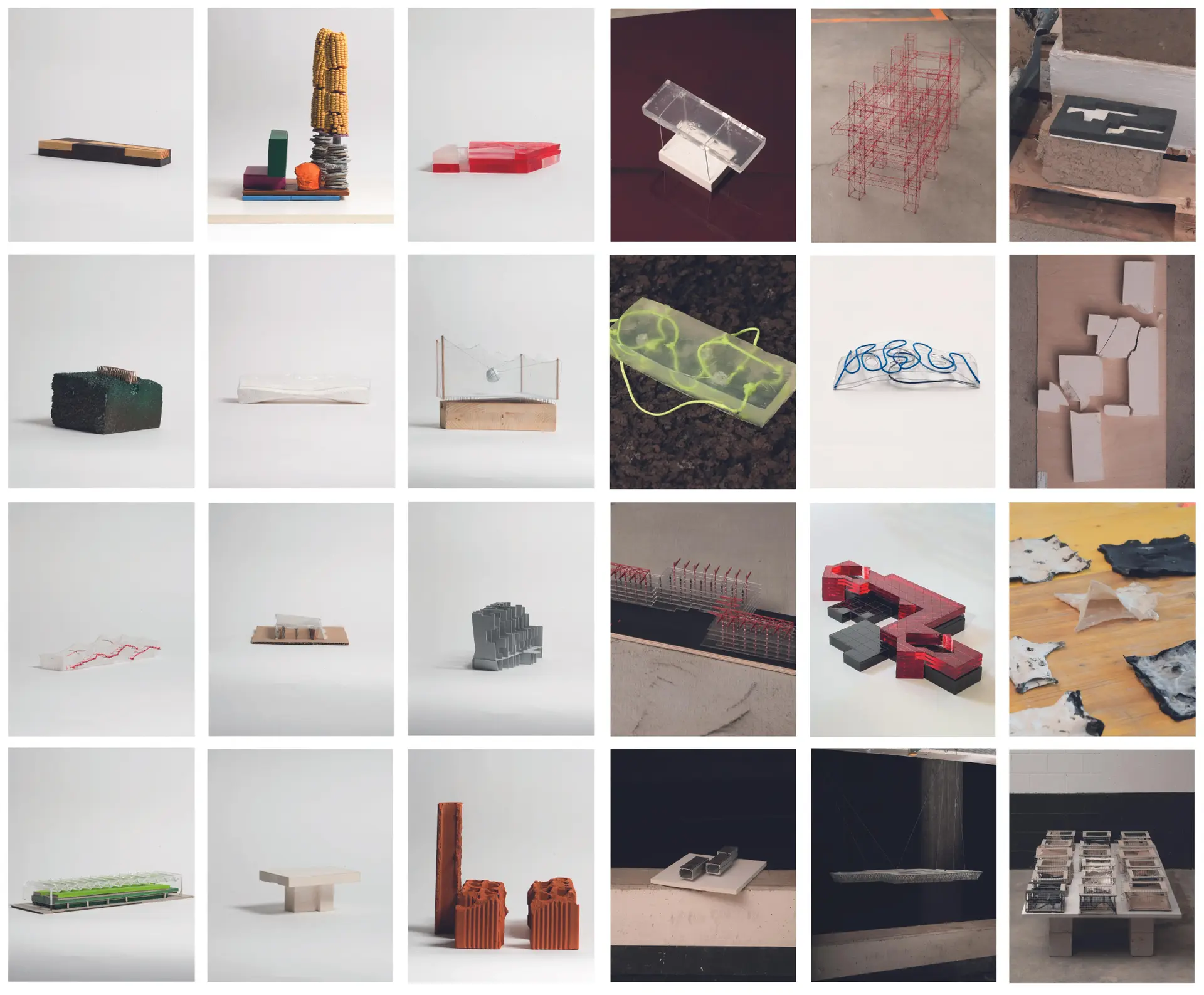
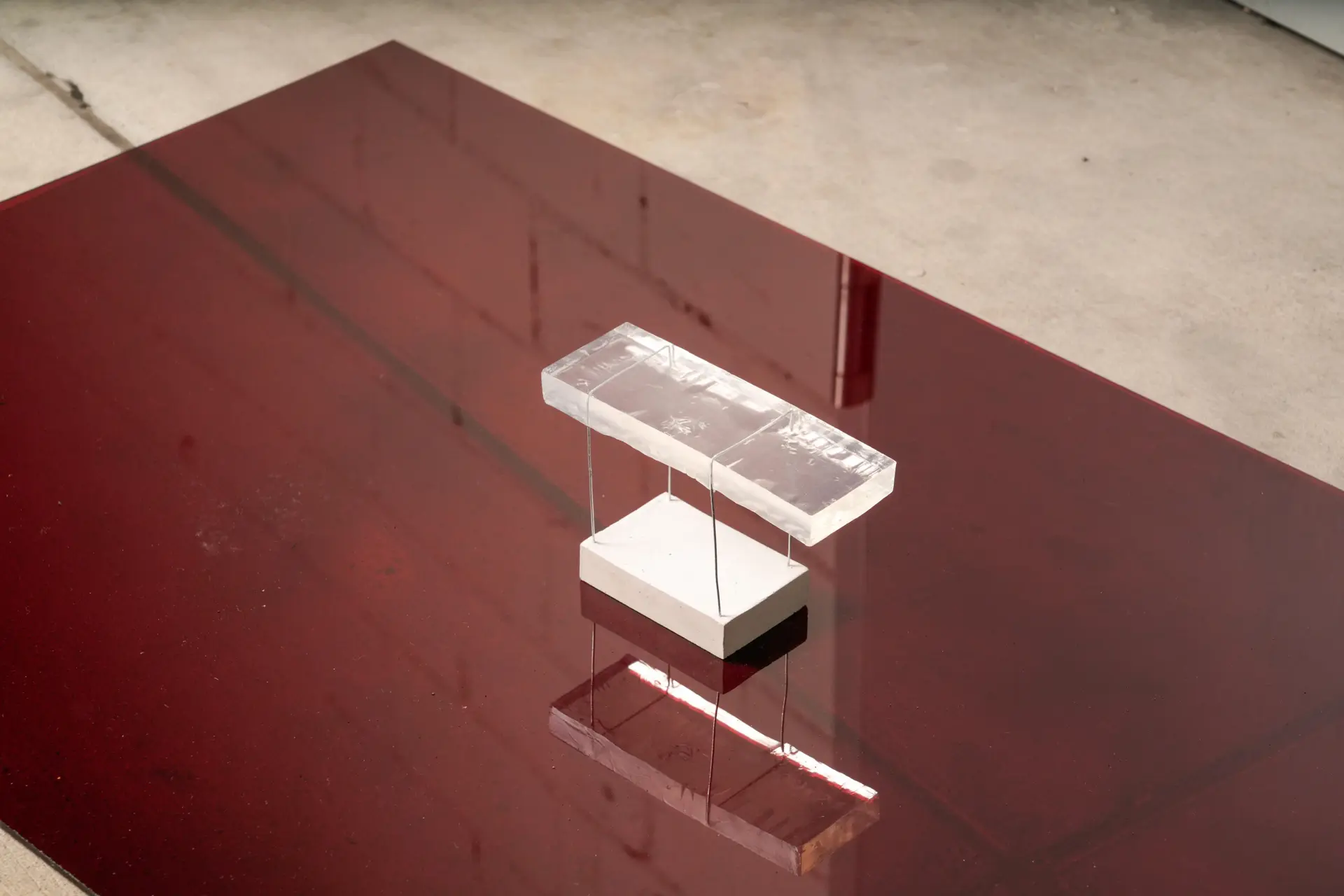
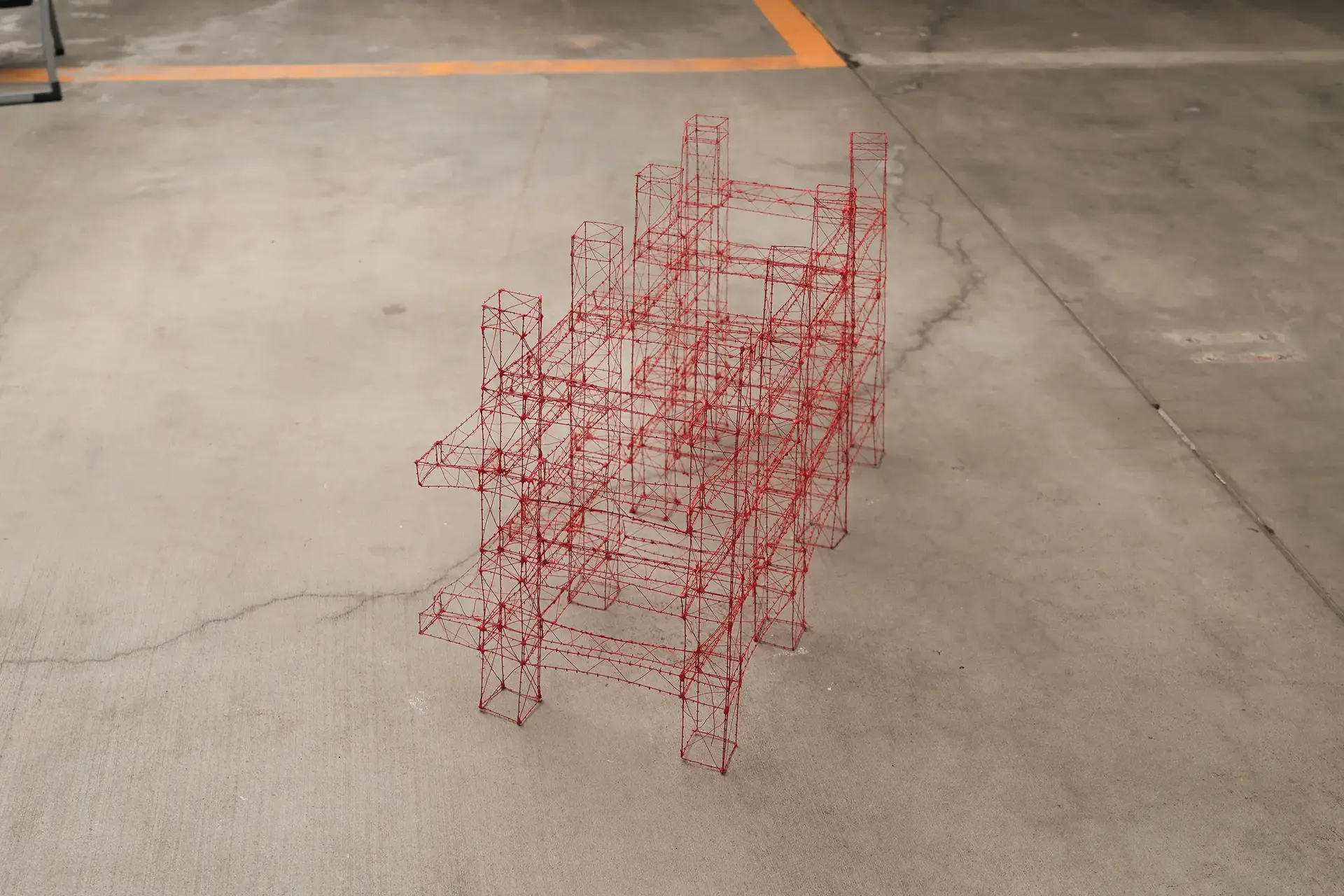
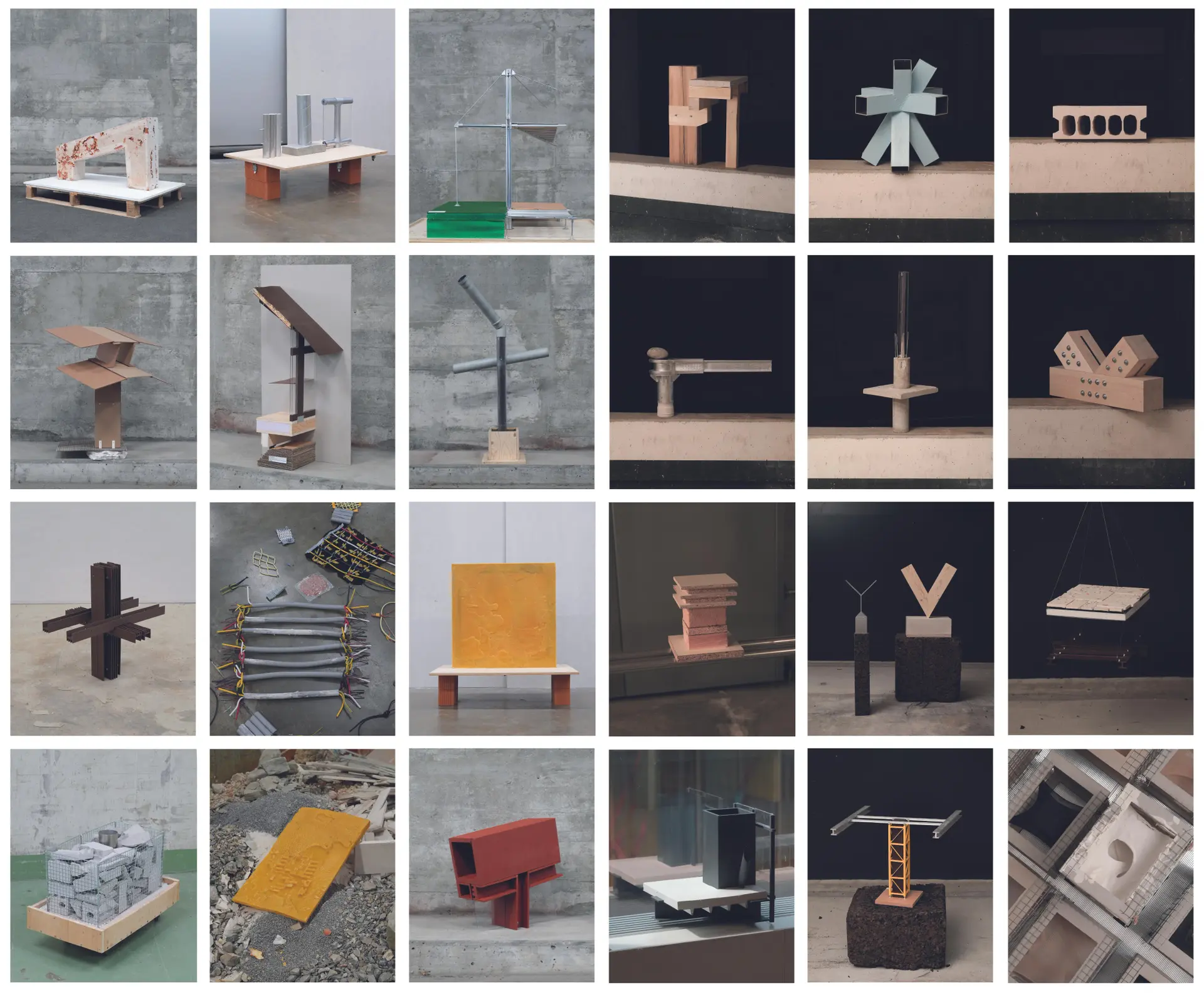
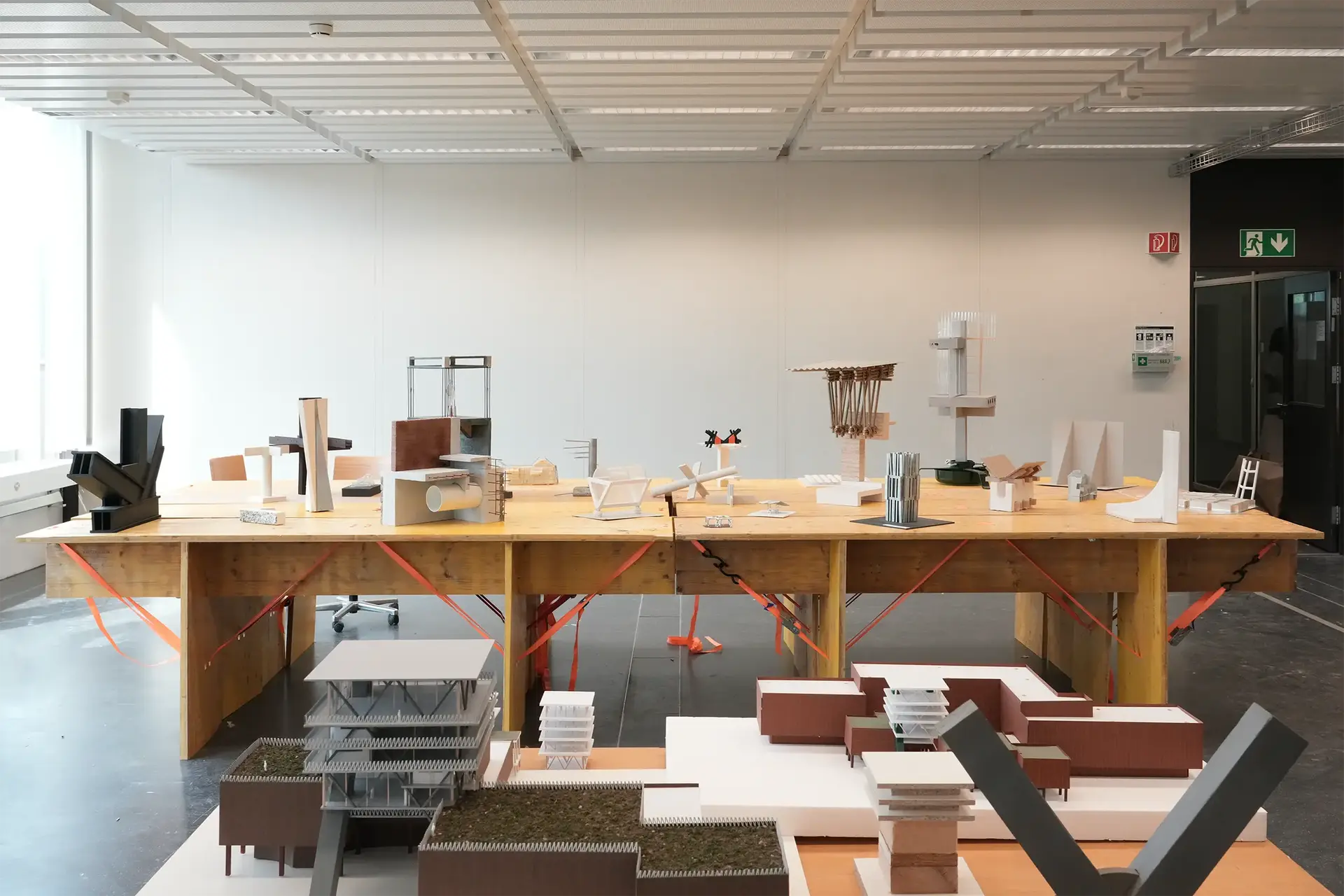
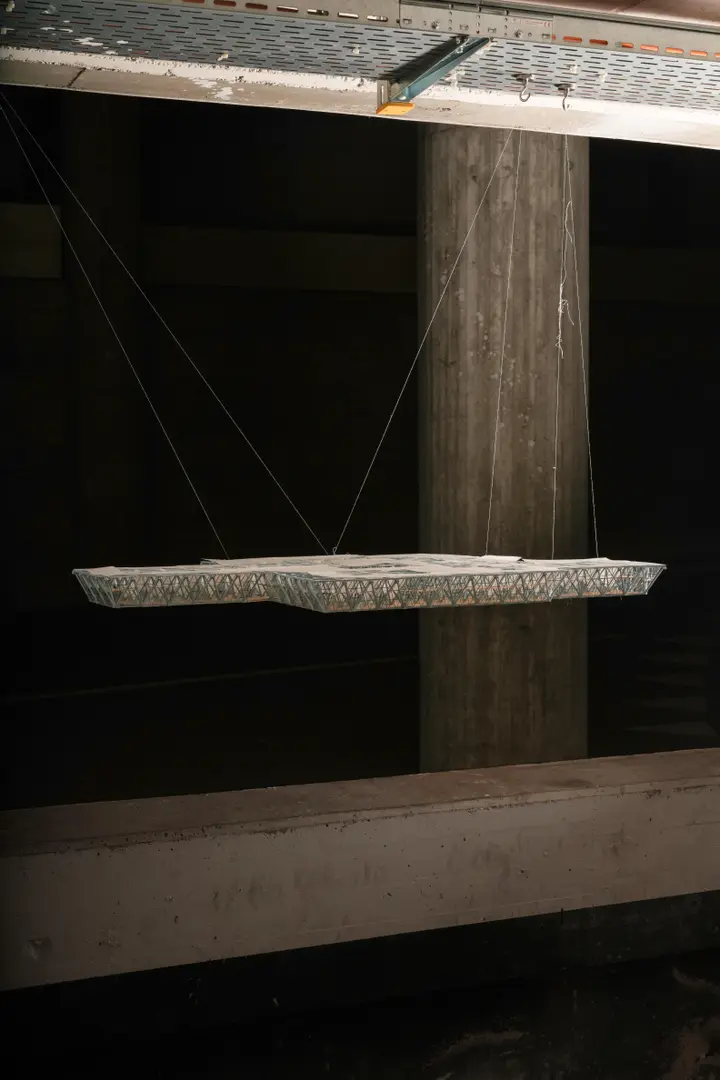
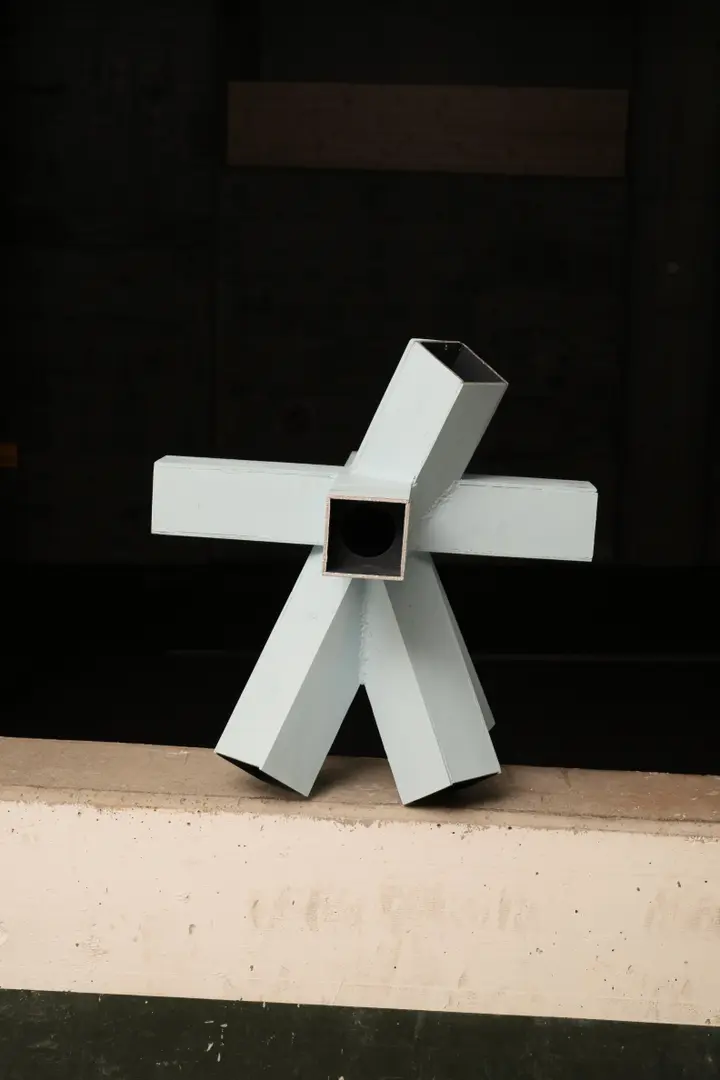
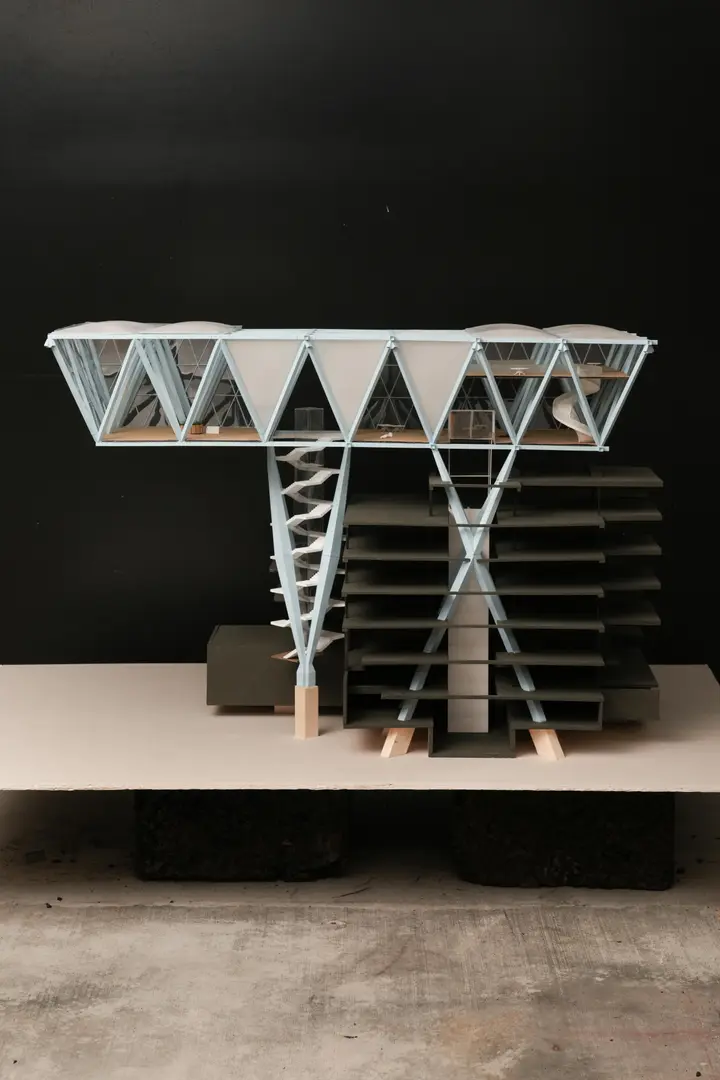
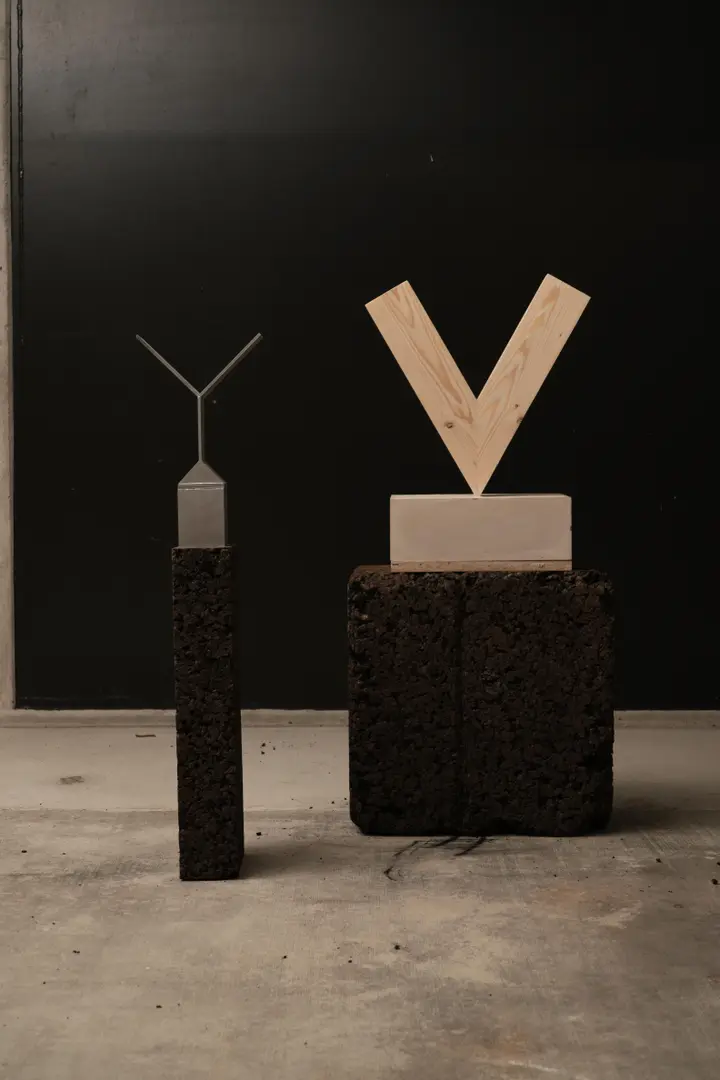
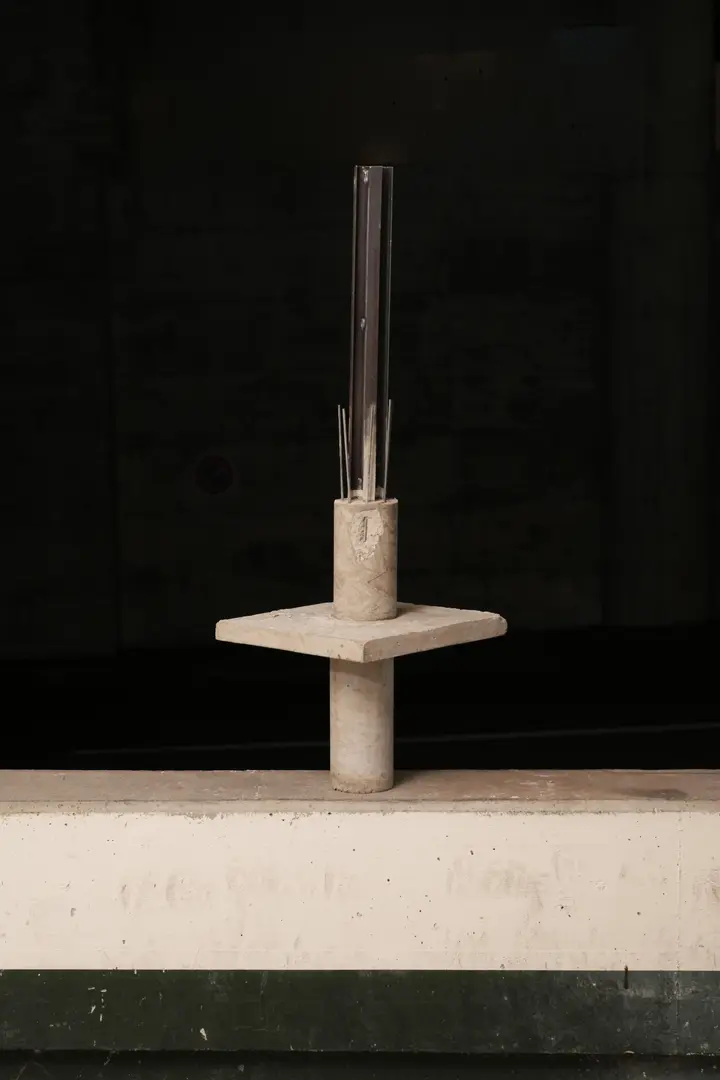
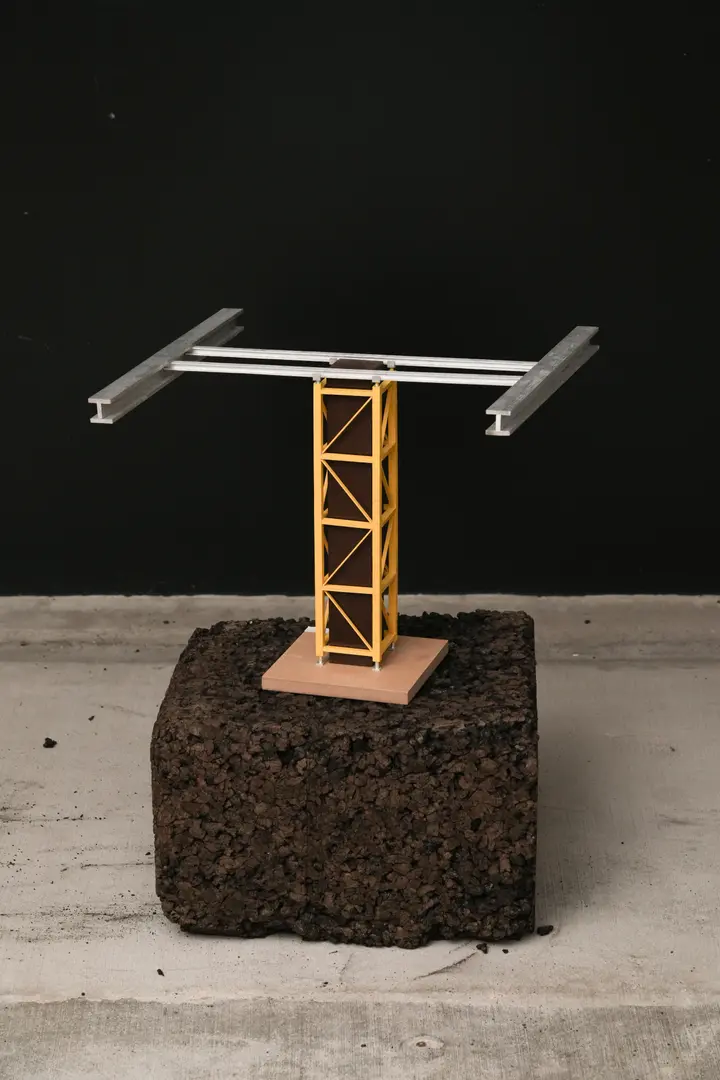
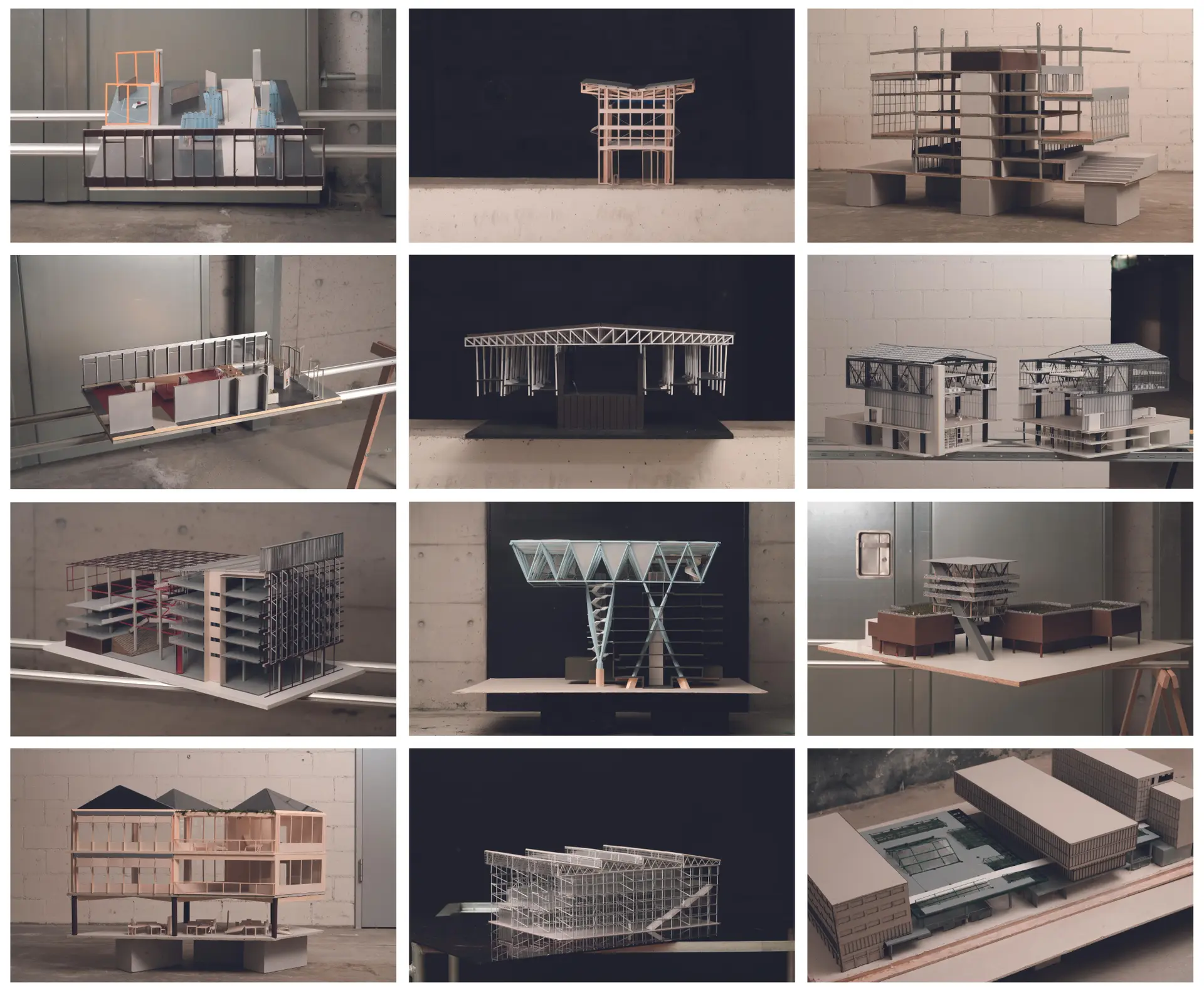
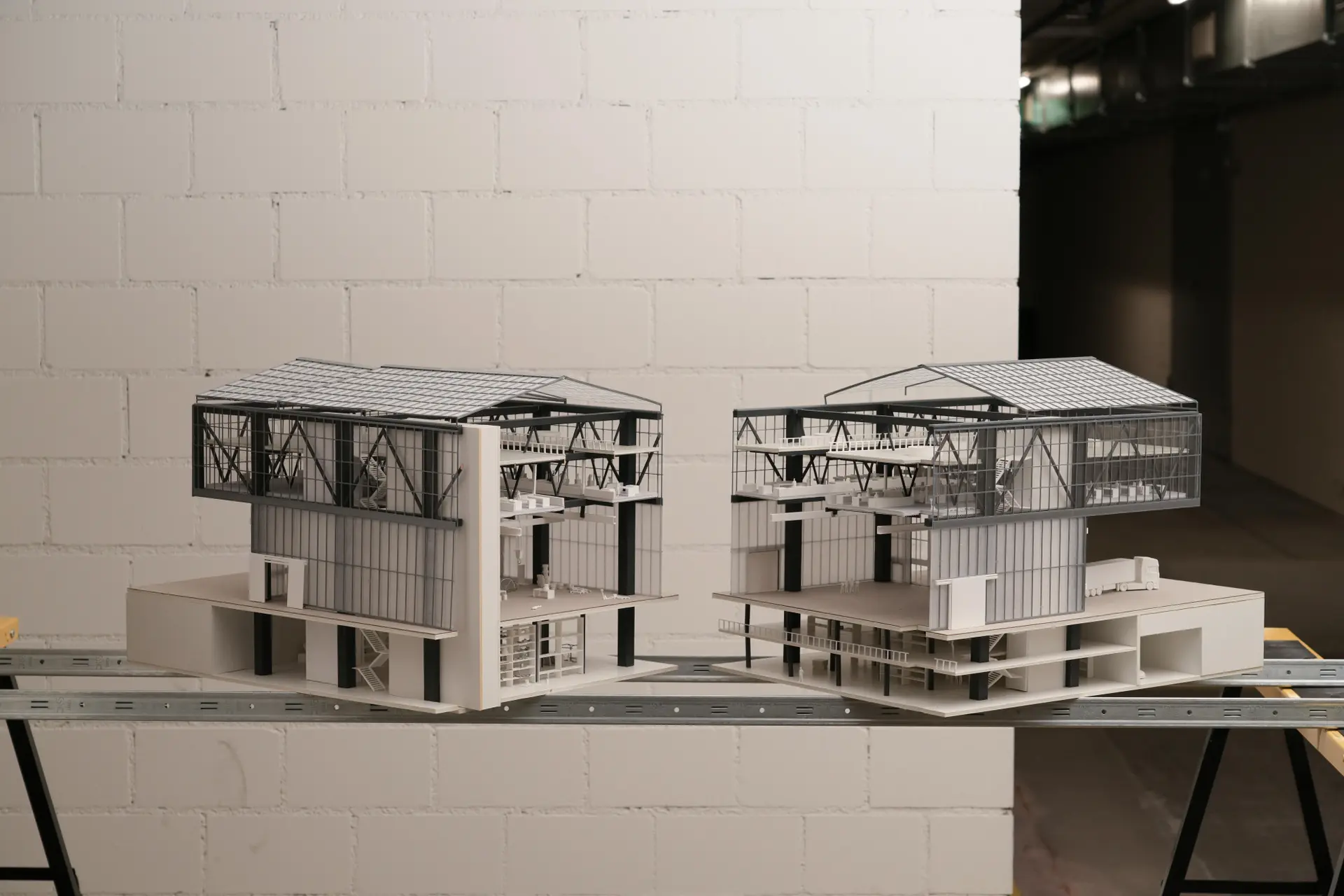
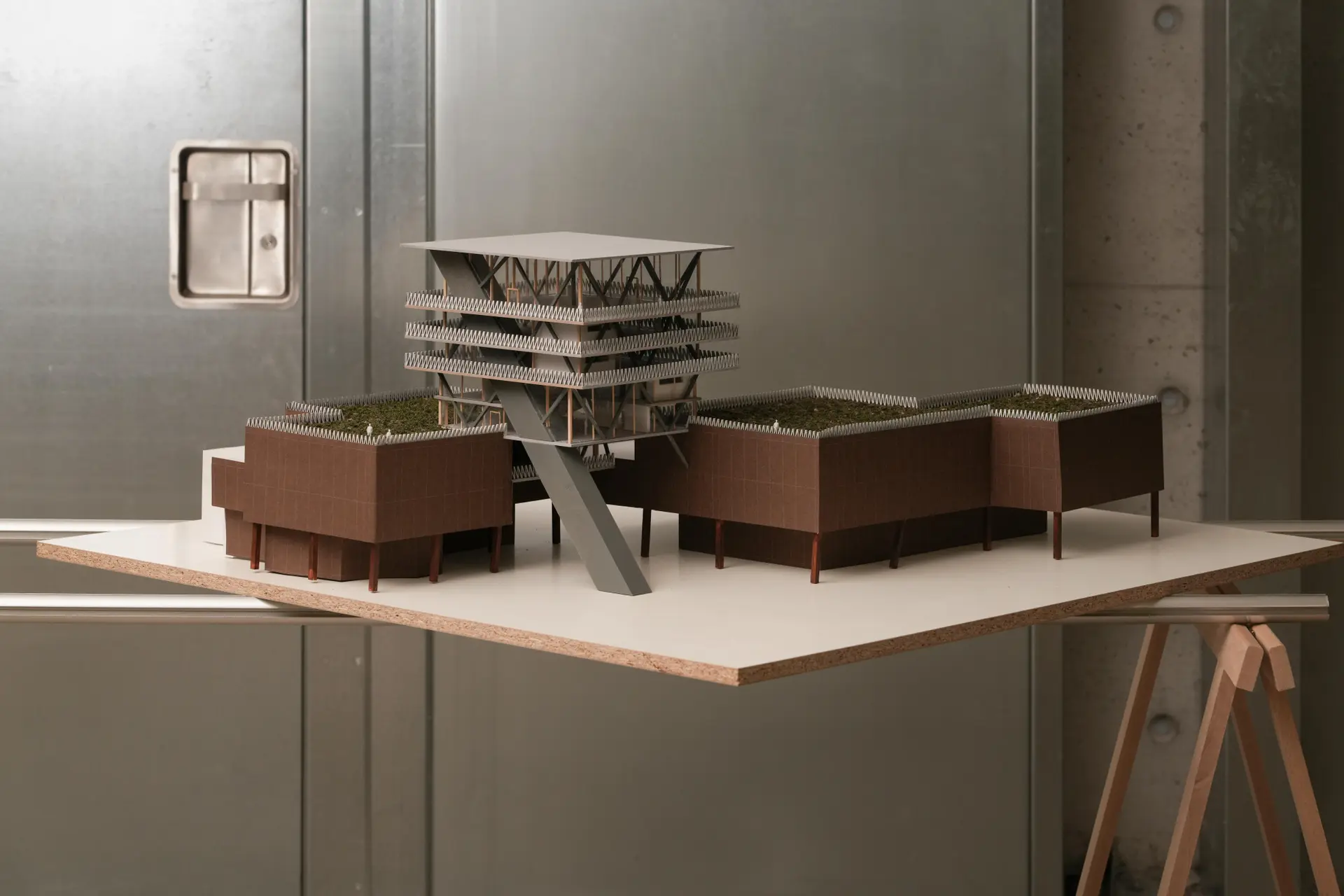
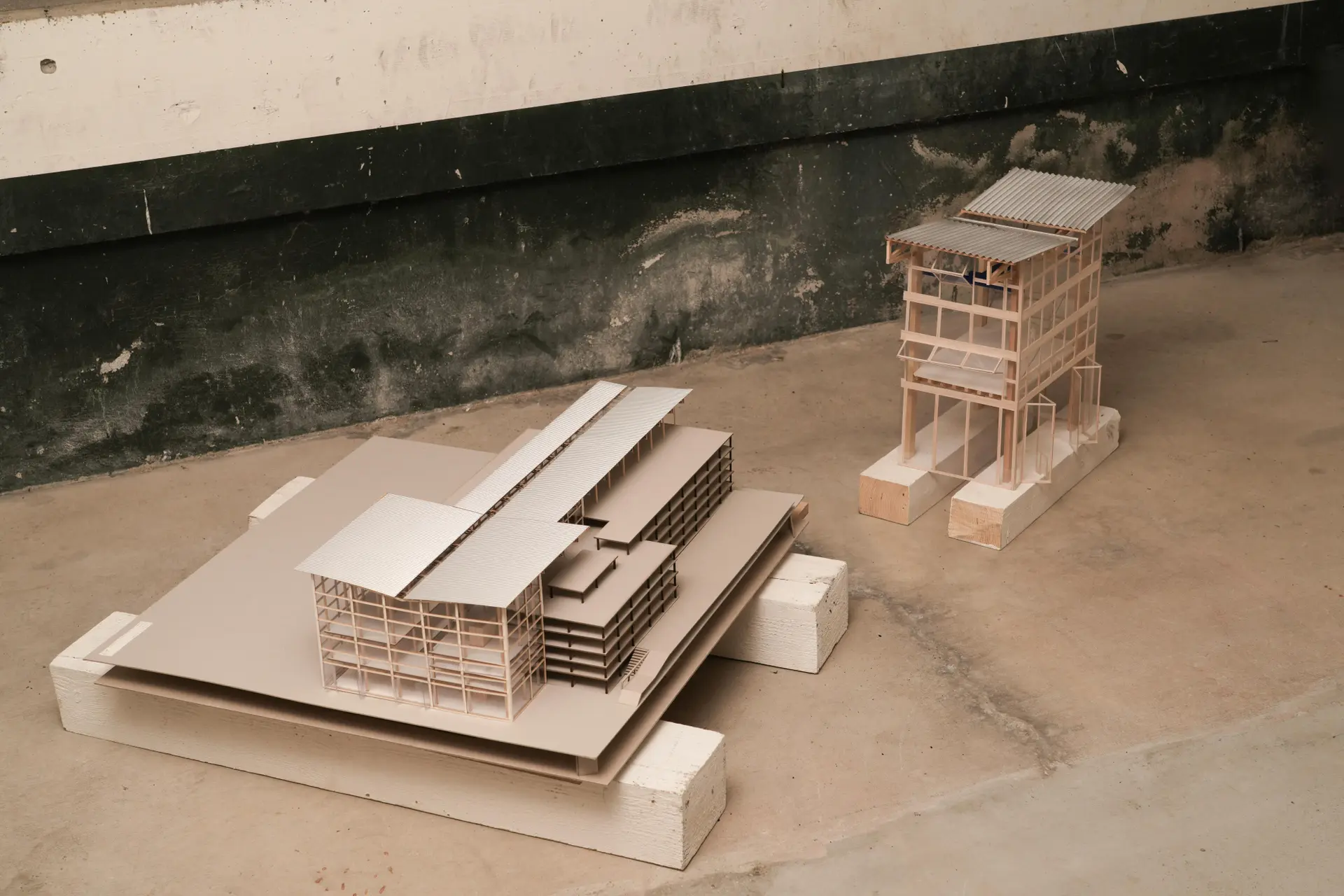
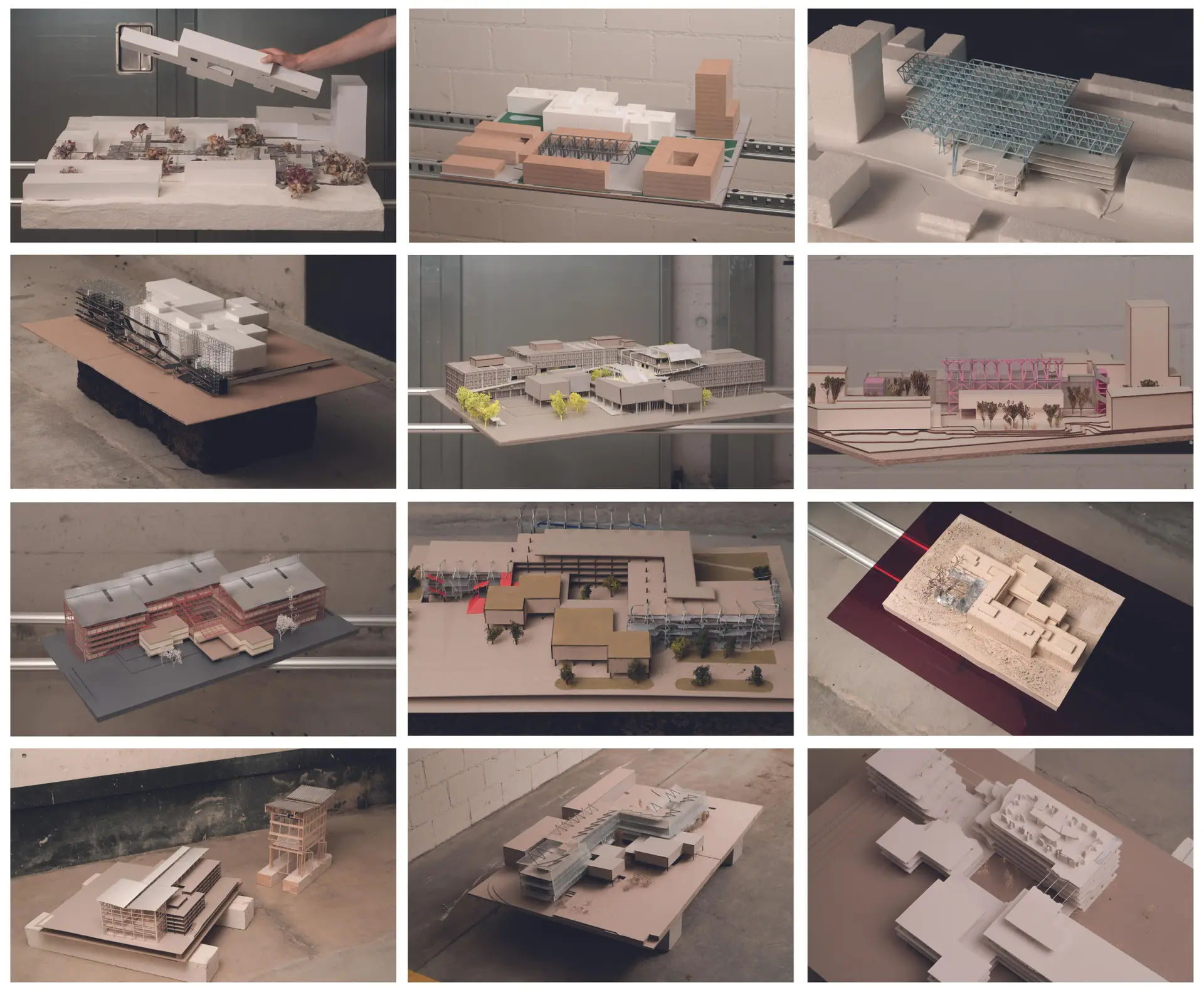
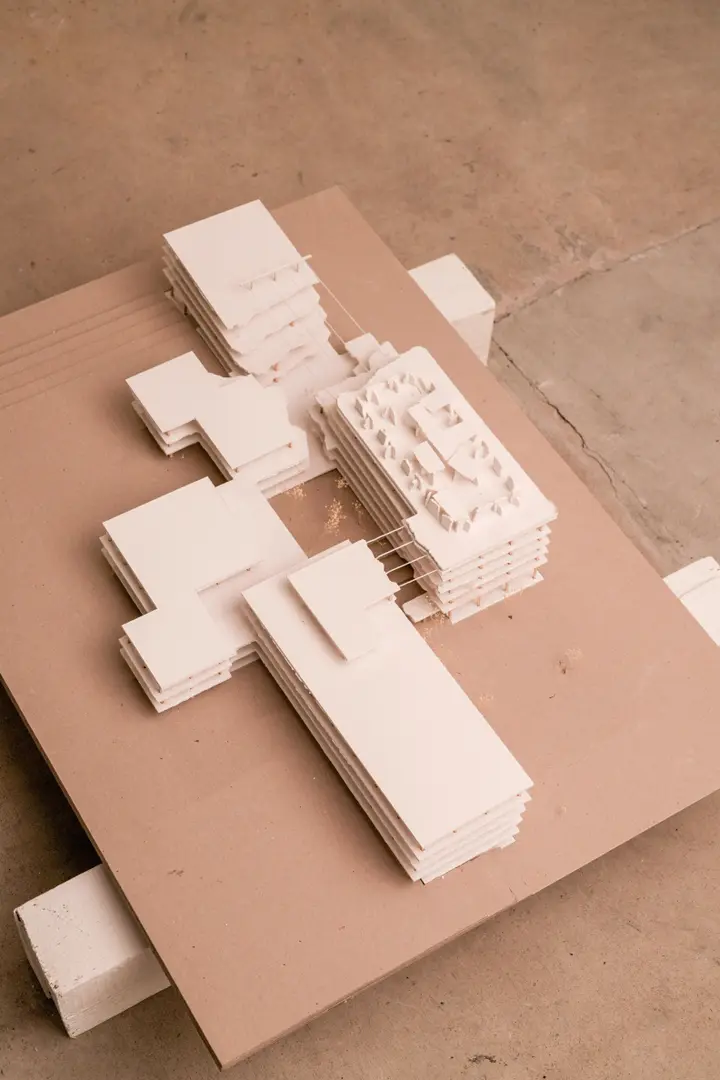
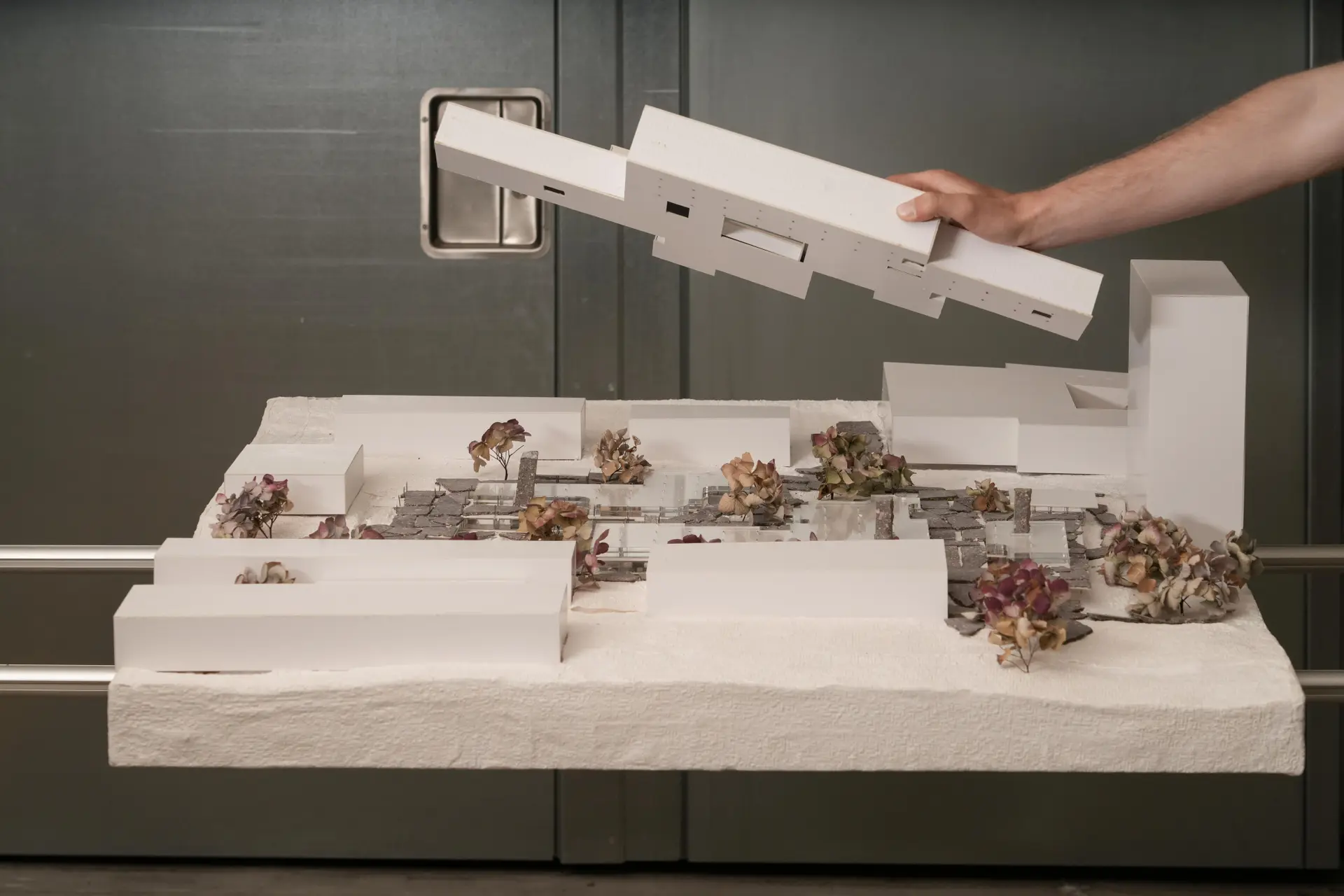
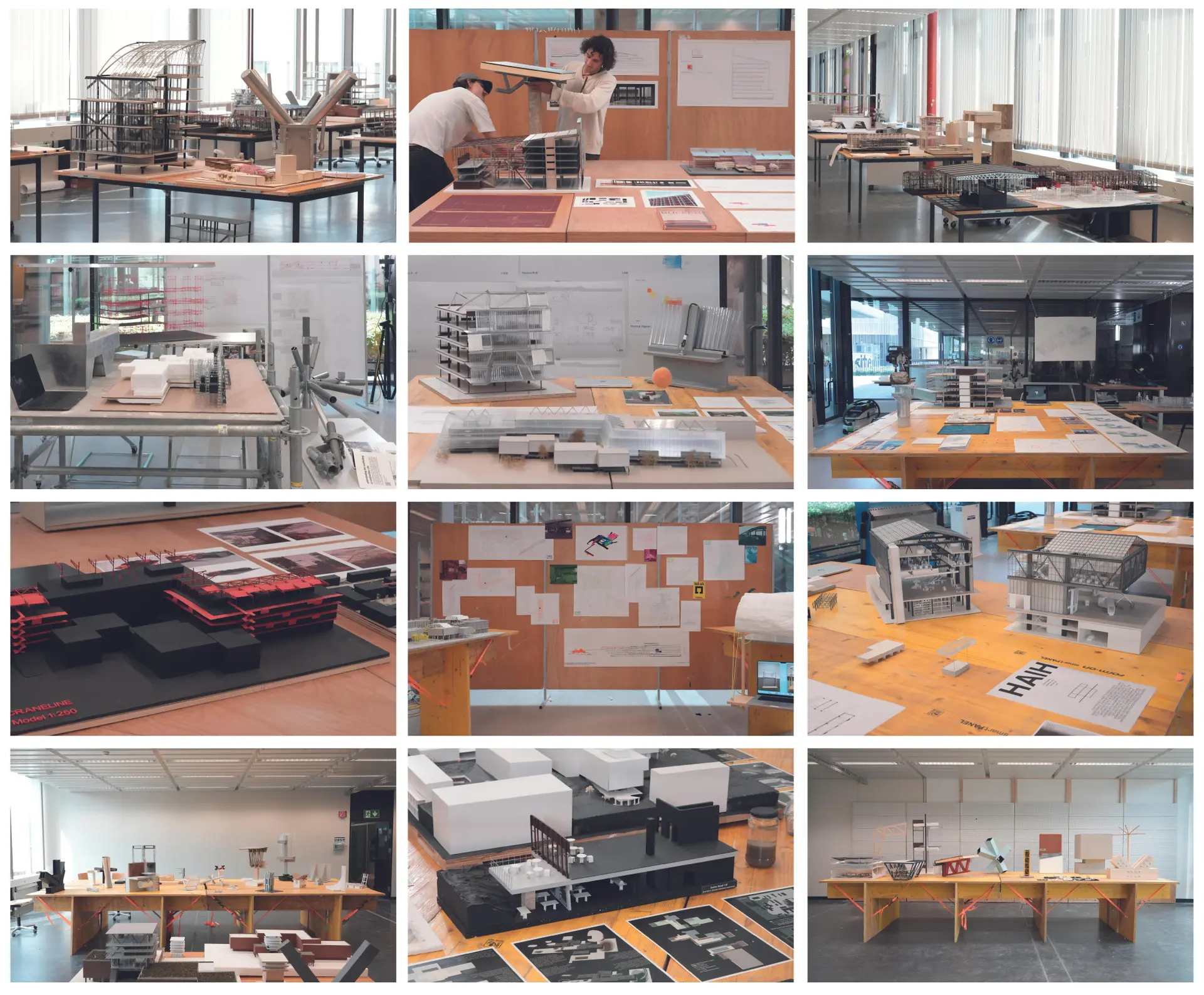
The curriculum had been structured as a continuous journey. Students began by redesigning the micro-environment of their immediate daily workflow and advanced to reimagining the macro-architecture of their educational institution. In the beginning of HS2025 – Disassembling parts, assembling people—students launched their design actions intuitively through hands-on making. By building their own studio tables using found materials, they established a personal relationship with craftsmanship, structure, and maintenance. After this, the focus shifted to deconstructing the HIL building. Students observed, measured, and documented its components, tracing material narratives from finished commercial products back to their natural origins. Using this shared catalogue, students developed construction prototypes that test alternative, harmonious relationships between humans, nature, and technology. In FS2026 – Transforming Structures, Building Knowledge – students conducted a rigorous comparative study of global architectural precedents, learning to read learning spaces structurally, environmentally, and programmatically. Applying their accumulated knowledge, students worked through five analytical lenses – People, Nature, Time & Change, Industry, and Knowledge Exchange – to propose a comprehensive transformation of the HIL building.
Methodology: Thinking Through Making
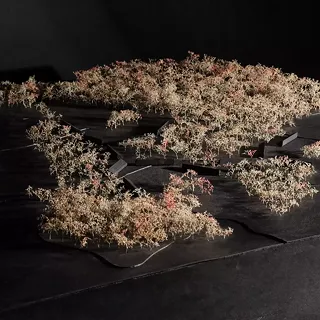
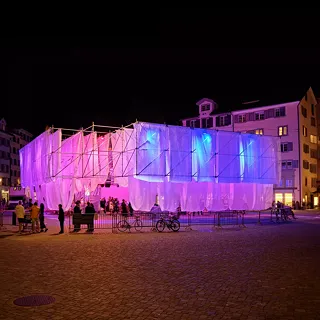
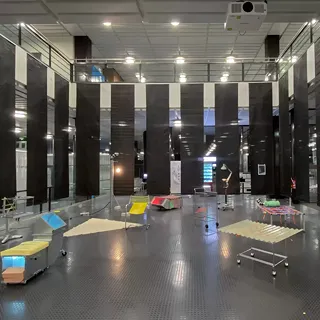
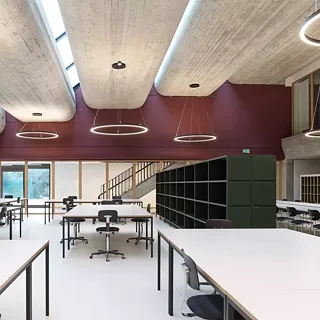
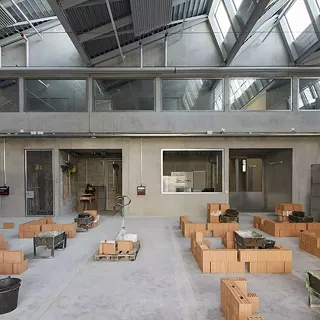
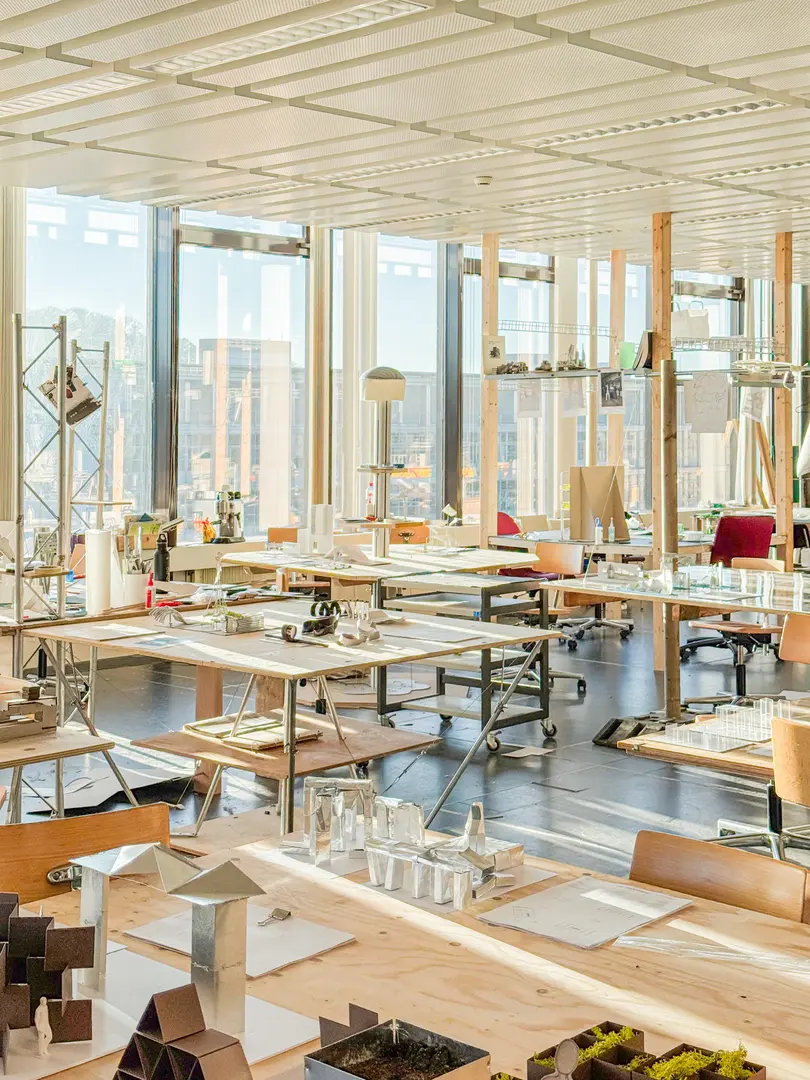
At the heart of this studio lies realization. Design and construction collaborate dynamically within the makerspace – a hybrid, collaborative space where experimentation, craft, and critical reflection converge. Making, thereby, is not merely a tool to show a finished idea; it is the primary mode of generating architectural clarity. Drawings, physical models, audiovisuals, and prototypes serve as active mechanisms to expose assumptions, test physical limits, and discover unexpected spatial opportunities beyond known applications.
Contemporary Challenges
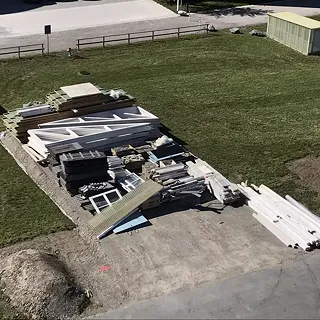
To address the urgent ecological crises of our era, the studio balanced creative imagination with technical rigor across three core pillars. Through resourcefulness, the existing building stock was not treated as rubble or an obstacle, but as a rich, circular «mine» of architectural elements. Students navigated the full lifecycle of materials—their origins, performance, adaptation, and eventual deterioration. Also breaking down the traditional silos of AEC disciplines (Architecture, Engineering, and Construction), the projects actively prototyped how academic spaces can be used more intensively, flexibly, and collectively to mirror modern, cross-disciplinary knowledge production. Every speculative future imagined for the HIL building remained directly accountable to real-world parameters: structural clarity, environmental responsibility, logistics, and spatial quality.
What does it mean to inhabit the Earth today? How can architecture respond to the urgency of building more with less—less material, less energy, less space – while offering more meaning, more connection, and more possibility? By bridging pedagogical theory with physical execution, the course trained students to think critically and build intelligently under the real-world constraints of our time.
The project by ETH Zurich was submitted for the Swiss Arc Award 2026 in the Next Generation category and published by Nina Farhumand.